


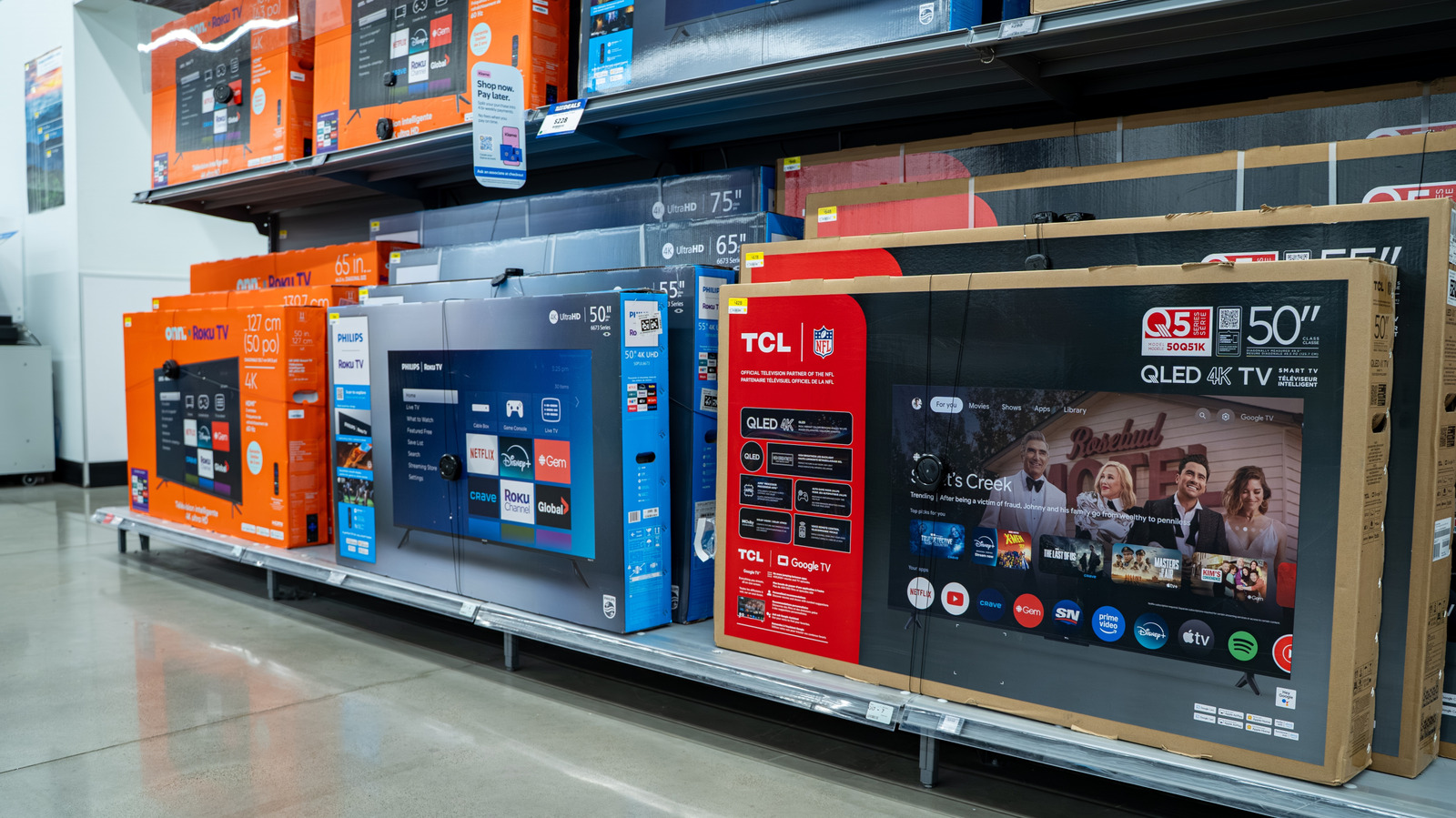
When you’re buying a new Smart TV, you often want to focus on the key hardware upgrades that deliver the best picture while ensuring it lasts a long time. And even if you can’t necessarily get the ideal cinematic experience right away, you can only hope a trusted manufacturer will include settings that help you boost your display.
When it comes to TV shopping, there are many choices: You can buy a top-notch Smart TV from TCL, Hisense, Sony, or Samsung, but what sets those brands apart is the cost. Essentially, those prices need to match what’s being offered. For example, TVs that boast an 8K display might not be worth paying double the price tag when 4K is more than enough to enjoy a family movie night or two.
You also might not care whether the TV has front-firing or down-firing speakers, since you may already plan to install a soundbar system instead. So when you’re shopping for a new Smart TV, consider the specs and features that actually matter before you pay extra for features you don’t need.
Useless bloatware and Smart TV software support
Depending on the manufacturer, your Smart TV may come with a set of useless pre-installed apps you couldn’t care less about. Sometimes the manufacturer will include a list of curated apps, such as dedicated Smart Home apps, manufacturer TV channels, and more. And for some of those apps, you may never have to interact with them to use your TV the way it should be used, whether you’re binge-watching Netflix or gaming on it. Those apps take up precious storage space. You also don’t technically need a built-in web browser, because plenty of other devices offer a better experience.
Because if you think about it, the internal software experience shouldn’t be what makes or breaks the cost of a new Smart TV. As more TVs adopt standardized OSes like Google TV, the software feels like it matters less (it becomes more of a nice-to-have feature), including the long-term software updates.
If your built-in TV software becomes obsolete because fewer apps are supported on an aged Smart TV, you can just consider purchasing external streaming devices like an Amazon Fire TV Stick to plug and play your favorite entertainment apps. So really, the internal software experience won’t end up mattering too much in the long-term.
8K resolution on consumer displays
Even if humans could perceive those 33 million pixels for it to matter and make a difference in the viewing experience, 8K would still be overkill and not particularly helpful. You also won’t notice the extra pixels if you sit too far away from the screen. So realistically, if you wanted to try and see those extra pixels, you need a very large display, but even then, it still might not matter.
A study was done in 2020 by Warner Bros et al. The study measured the perceived differences between a 4K and an 8K display. The study used an 88-inch display, which is considered decently large for most people. It turns out that most consumers still couldn’t tell the difference between the resolution sizes.
Additionally, the technology is still relatively new, which makes buying a Smart TV with 8K capabilities more expensive, and you’re also paying extra for something that most content won’t utilize until later. For budgeting purposes, stick to a solid 4K display; you won’t notice much of a difference, and 4K Smart TVs have been out for roughly a decade, making them much more widely available and easier to secure at a sensible price.
Motion smoothing or interpolation
Motion smoothing, or motion interpolation, is a built-in setting that aims to improve the TV’s image quality by reducing blurring. While this is a more positive effect for fast-moving images, like live sports, it is pretty much useless for other types of content. The reason is that motion smoothing inserts extra frames between the original frames to improve the frame rate.
Motion smoothing, or motion interpolation, can actually give other types of content an unnatural look. Movies, for example, are typically shot at 24-30 FPS, so cranking up the frames to 60 FPS with motion smoothing will look noticeably worse than when it’s off. You’ll hear people describe it as the “Soap Opera Effect” because the inserted artificial frames make the image much more dramatic than it should be. That’s why people opt to turn it off.
Some new TVs even feature a “Filmmaker Mode” to automatically disable it. But why pay for a high-end TV that features a useless setting like motion smoothing or motion interpolation as standard, just to make the picture look artificial and unnatural?
Your Smart TV’s internal speakers
Don’t ever break the bank for a Smart TV that boasts built-in premium audio technology. Sony TVs, for example, include a specialized front-firing “Acoustic Surface” to improve sound quality for their OLED Bravia TVs. But you should never pay extra for it.
You’re better off paying for a TV with a great visual experience since you can always invest in a proper soundbar system later. Plus, it’s tough to design a Smart TV with good built-in speakers simply because of physical limitations: Thinner TV displays don’t leave much room for proper speakers that can handle lower frequencies, and many are made to fire downwards. That means sound doesn’t reach viewers directly, sometimes, making the perceived audio sound more muffled than it should be.
If you’re really worried about sound from your speakers, you’ll want to pay attention to the spatial audio technology the manufacturer supports, primarily if the Smart TV supports Dolby Atmos. The spatial technology is what’s responsible for adding that vertical dimension to your surround sound, making everything you hear sound more realistic.
