


:max_bytes(150000):strip_icc():format(jpeg)/GettyImages-2261788568-5e9cd0b03cf34ccba8b39c9a69908ca0.jpg)
February 19, 2026 11:09 AM EST
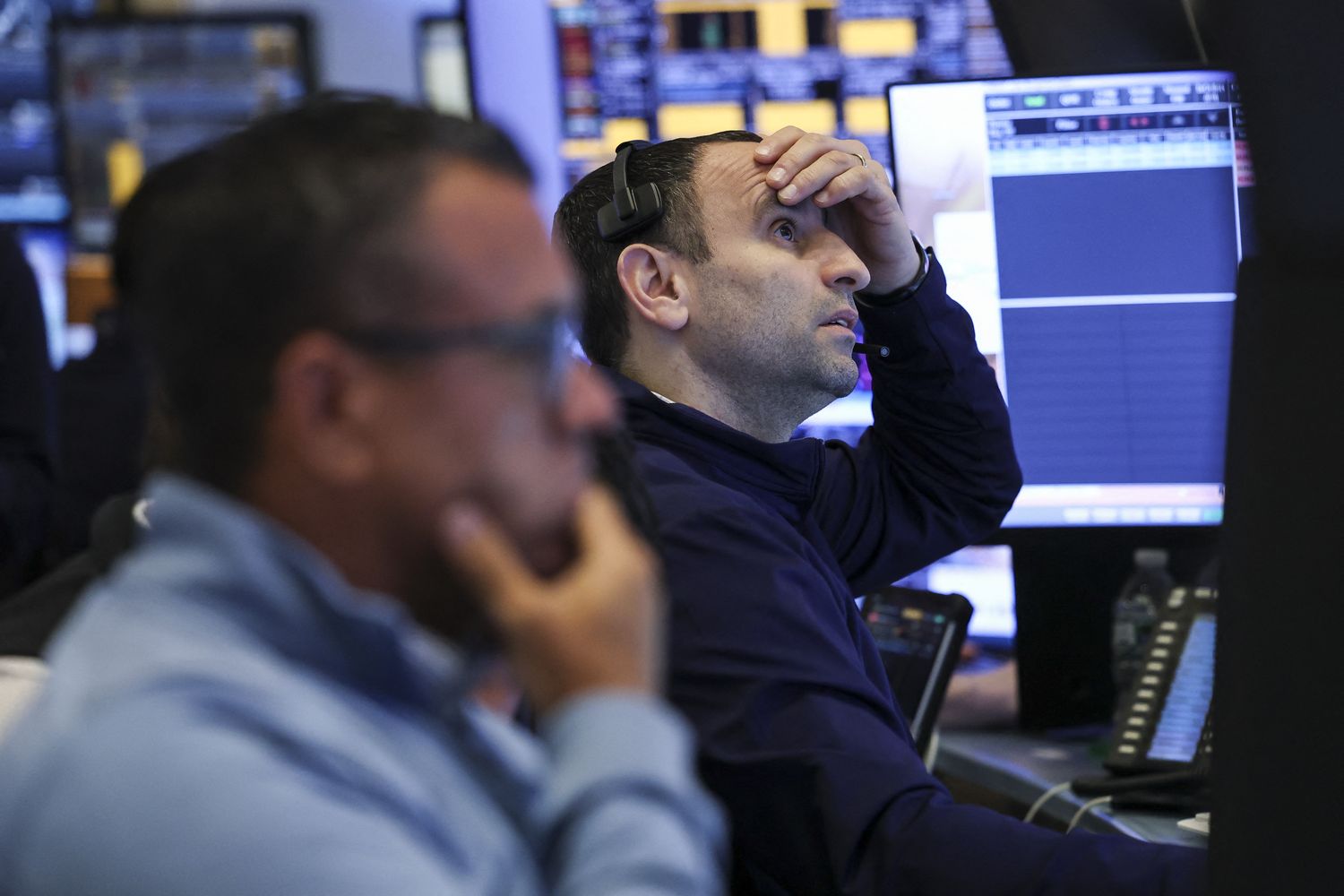
U.S. Stocks Are Having a Rough Start to the Year
FROM 1 minute ago
It’s a big year for international sporting competition—the Winter Olympics, this summer’s World Cup. In the stock market, the U.S. is losing badly.
U.S. stocks are off to their worst start to a year relative to the rest of the world since 1995, according to a recent Goldman Sachs note.
The MSCI World ex-USA Index, which tracks large-and mid-cap stocks in every developed market except the U.S., is up 8.2% so far this year, nearly six percentage points ahead of the equivalent index that includes the U.S. The S&P 500, the benchmark U.S. equities index, is essentially flat for the year.
After years of outperformance, U.S. stocks began to trail the rest of the world last year. Elevated U.S. stock valuations, geopolitical and economic uncertainty, stimulus measures abroad, and a weakening U.S. dollar all played a part in the reversal of fortunes. Since the start of 2025, major indexes tracking the European market, developed markets in Asia, and global emerging markets have all more than doubled the S&P 500’s approximately 17% return.
The divergence has accelerated this year. All but one major European stock market is pacing the S&P 500 this year. Belgian, Norwegian, and Turkish benchmarks are all up double digits this year. Denmark, the sole outlier, has been weighed down by shares of GLP-1 pioneer Novo Nordisk (NVO), which is feeling the pressure in a fiercely competitive weight loss market.
In Asia, Korea’s KOSPI Composite has soared nearly 35% in just the last month and a half. Some of the index’s largest components, including chip giants Samsung and SK Hynix, are riding a surge in AI-related data center spending.
Meanwhile, the tech stocks that led the S&P 500 to a series of record highs over the past year have been a drag on the index in recent months. The Roundhill Magnificent Seven ETF (MAGS), composed of seven tech companies with market caps ranging from $1.5 trillion to $4.5 trillion, is down more than 6% this year.
February 19, 2026 09:55 AM EST
What To Expect From Friday’s Inflation Report
FROM 1 hr 15 min ago
The Fed’s inflation benchmark likely worsened, not improved, over 2025.
A report from the Bureau of Economic Analysis on Friday will likely show consumer prices as measured by Personal Consumption Expenditures rose 2.8% over 12 months through December, according to a survey of economists by Dow Jones Newswires and The Wall Street Journal. “Core” PCE, which excludes volatile food and energy prices, is forecast to rise 3.0%, up from 2.8% in November.
That would put both measures slightly higher than they were in January 2025. The expected rise in core PCE inflation could be especially notable because that’s the yardstick the Federal Reserve uses to gauge its 2% annual inflation target.
Michael Nagle / Bloomberg via Getty Images
If the report matches expectations, it could throw some cold water on the optimism that arose in financial markets last week when another inflation measure, the Consumer Price Index, showed a promising slowdown in January.
What’s more, some forecasters expect the annual PCE measure to continue edging up as companies pass the cost of tariffs along to consumers. Economists at Goldman Sachs, for instance, expect core PCE to rise to 3.05%, which would be the highest since March 2024. (PCE reports are being released a month later than usual because of last year’s government shutdown, and the January PCE report will be published in March.)
Officials at the Fed will look at upcoming inflation data, especially PCE, when deciding whether to cut borrowing costs to help boost the job market or keep them higher for longer to wrestle inflation down to the 2% target.
“With inflation well above target for going on five years in a row, policymakers will need more clarity on inflation trends before cutting rates further, especially given that some of the downside risks to the labor market seem to be receding,” economists at Deutsche Bank led by Justin Weidner wrote in a commentary. “These data strengthen our view that the Fed will not be able to cut again until later this year.”
-Diccon Hyatt
February 19, 2026 09:00 AM EST
Futures Point to Lower Open for the Major Indexes
FROM 2 hr 10 min ago
Futures contracts connected to the Dow Jones Industrial Average were down about 0.3% in premarket trading on Thursday.
S&P 500 futures were also off 0.3%.
Nasdaq 100 futures contacts fell 0.4%.
