


:max_bytes(150000):strip_icc():format(jpeg)/GettyImages-2240012227-13cf9f9f4b0841c78f9c72775591386d.jpg)
Key Takeaways
- Research from the New York Fed shows Americans, not foreigners, are bearing the cost of tariffs.
- The Trump administration criticized the study, calling it partisan and questioning its methodology.
- The conflict highlights ongoing tensions over the Federal Reserve’s independence from political influence.
Get personalized, AI-powered answers built on 27+ years of trusted expertise.
The latest battleground in the feud between the White House and the Federal Reserve system is a routine economics paper.
Researchers at the New York Fed published findings last week showing that Americans are paying the cost of President Donald Trump’s tariffs, contrary to Trump’s claims that foreigners are footing the bill.
Administration officials have said in the days since that those researchers should be punished and that the findings were partisan. One Fed official has responded, defending the research and the Fed’s independence.
What This Means For The Economy
Economists consider the independence of the Federal Reserve crucial to its credibility and hence its ability to use monetary policy to control inflation. If the Fed loses its independence, the risk of runaway inflation increases, experts say.
“The people associated with this paper should presumably be disciplined,” Kevin Hassett, director of the National Economic Council, said in an interview on CNBC Wednesday. “They’ve put out a conclusion which has created a lot of news that’s highly partisan based on an analysis that wouldn’t be accepted in a first-semester econ class.”
One Fed official responded to Hassett’s comments, calling them another attack on the central bank’s autonomy.
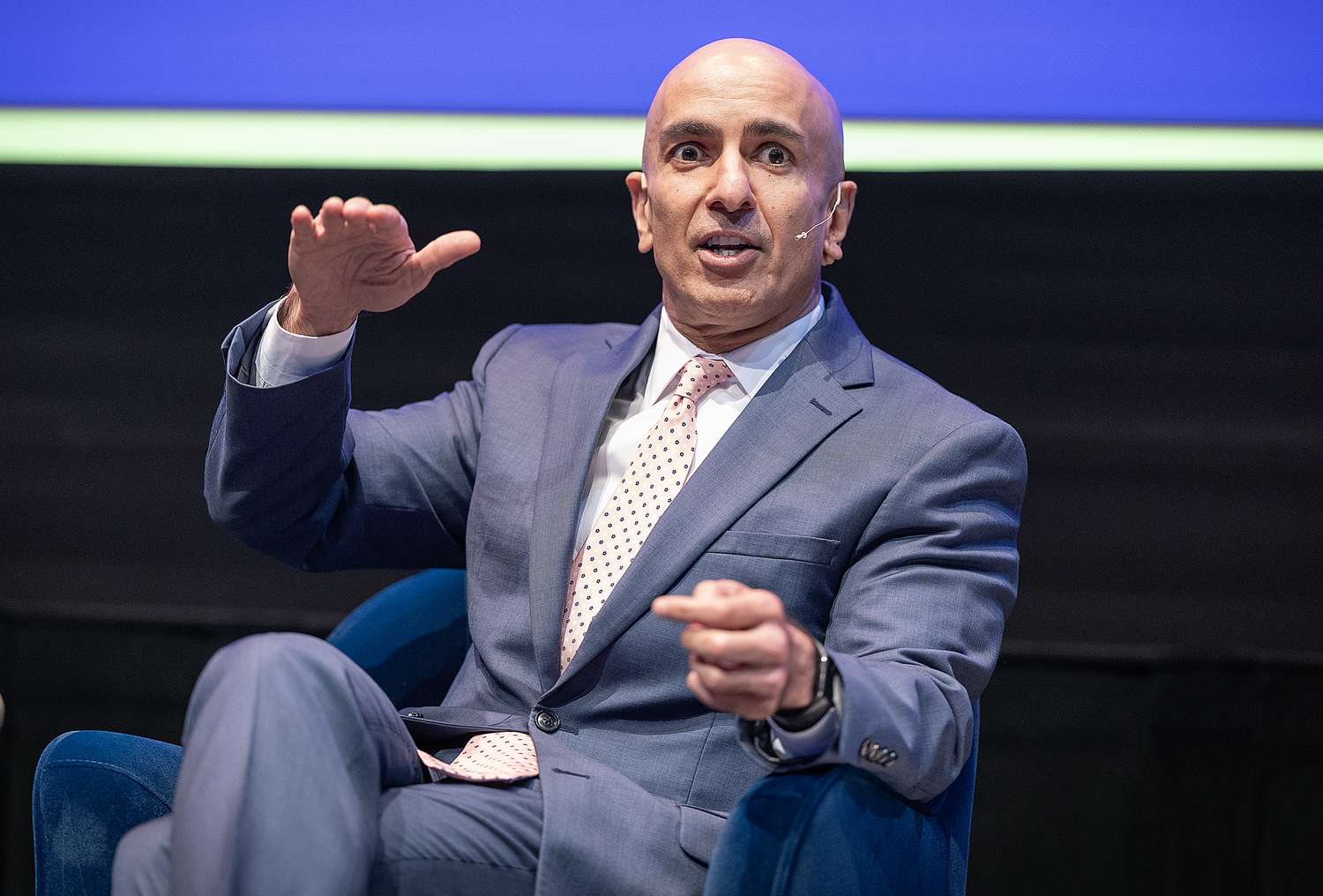
“This is just another step to try to compromise the Fed’s independence,” Kashkari said at a Q&A event in North Dakota Thursday morning. “Over the last year, we’ve seen multiple attempts to try to compromise the Fed’s independence, including in December, when the Department of Justice served a subpoena to the Board of Governors over some building expenses.”
The back-and-forth over the research is the latest in a larger conflict between the White House and the Fed.
Since his second inauguration, Trump has pushed for steeper rate cuts and threatened to fire members of the central bank’s policy-setting committee. Fed officials like Kashkari have said this is an attempt to undermine the Fed, which was set up by Congress to be independent from the White House.
The administration rebutted Kashkari’s remarks Thursday afternoon. Pierre Yared, acting chair of the Council of Economic Advisors, redoubled the criticism of the study.
“Looking at comments over specific studies and claiming that this is an attack on Fed independence is a little bit hyperbolic,” he said in an interview on Bloomberg Television.
The New York Fed’s findings were in line with those of other economists studying the issue, including forecasters at the nonpartisan Congressional Budget Office. All 12 Federal Reserve banks have research departments that routinely publish economic analyses, often examining public policy but rarely sparking controversy.
The stakes of the conflict are high because the Fed is tasked with using monetary policy to keep inflation under control and employment at a maximum. Experts say the Fed’s credibility hinges on the public’s perception that it is acting independently of political pressure.
