


From Microsoft to “microslop”: The AI backlash that forced a reset keeps showing up in conversations for a reason. The story below covers what is actually happening, where the trade-offs sit, and what a careful reader should take from it.
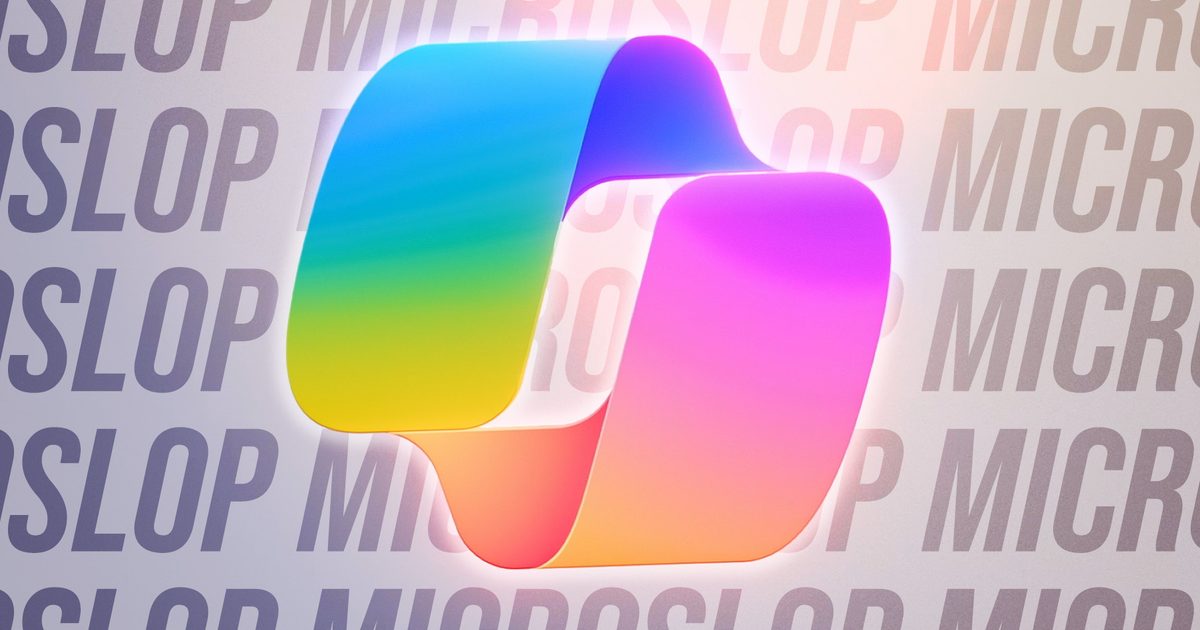
At some point in 2025, Windows stopped feeling like an operating system and started feeling like a demo for AI. Open Notepad to jot something down, and there it was, nudging you to summarize. Fire up Edge, and Copilot would politely wave from the sidebar. Even apps like Microsoft Paint began to feel different, not because they got simpler, but because they suddenly wanted to generate, edit, and enhance images for you.
Microsoft wasn’t just adding AI, it was threading it into every corner of the experience. And for a while, that felt exciting. Then it started to feel… a bit much.
Microslop: The Internet’s Favorite Roast
That’s roughly when the internet did what it does best. It coined a name: Microslop. Crude, catchy, and brutally effective. Borrowing from the broader idea of “AI slop,” which refers to low-quality, mass-produced AI output, the term quickly became shorthand for something more specific.
Not just bad AI, but unwanted AI.
The kind that shows up uninvited, sits too close, and insists on helping when you really just wanted to type a grocery list. It captured a growing frustration that Microsoft’s software was becoming noisier, heavier, and a little less predictable.
The backlash got loud enough that even CEO Satya Nadella publicly pushed back on the idea of AI being dismissed as “slop.” Ironically, that only made the term spread faster. By early 2026, it had become a full-blown cultural shorthand for dissatisfaction with Microsoft’s AI push, even getting banned in some official communities. At that point, this wasn’t just a meme anymore. It was feedback.
The Moment Microsoft Blinked
For a while, it felt like Microsoft would just keep pushing forward. But then, in March 2026, in a surprisingly candid blog post titled “Our commitment to Windows quality,” Microsoft acknowledged what users had been saying for months. The company talked about improving reliability, reducing friction, and making Windows feel smoother and more dependable again. Among other things, Microsoft said that it’d also be cutting down on Copilot’s presence across Windows.

And those weren’t just hollow promises. Across multiple apps, the company has reduced the number of entry points where AI showed up. Features that had been announced earlier, like deeper Copilot integrations in notifications, have quietly been shelved. What’s more, is that apps like Notepad, Photos, and Snipping Tool no longer have visible Copilot hooks.

On paper, it looks like exactly what users had been asking for. Less AI clutter. More focus. Naturally, the narrative became simple. Microsoft had heard the backlash and was scaling things back. But like most simple narratives, this one doesn’t quite hold up.
Why Microsoft Can’t Just “Turn Off” AI
Here’s the thing. Microsoft can’t actually walk away from AI, even if it wants to. This isn’t a feature toggle. It’s the foundation of everything the company is building right now. From Azure infrastructure to Microsoft 365 to Windows itself, AI is deeply baked into the strategy. Billions have already been invested. Entire product lines are being reshaped around it.

Microsoft was an early backer (read: billions of dollars) of OpenAI, heavily integrated ChatGPT in its products, and then borrowed rival Anthropic’s Claude AI to boost Copilot — all while developing its own AI models. The AI push even birthed a whole new breed of laptops with a Copilot+ branding and a dedicated Copilot button on the keyboard deck.
Yeah, “preposterous,” you might say.
Even now, while scaling back visible integrations, Microsoft is still pushing Copilot into enterprise tools, workflows, and services. So what you’re seeing isn’t a retreat. It’s a recalibration. AI isn’t going away. It’s just being repositioned by making it less visible, but silently seeping into the foundations.
Stealth Mode Activated?
You can see this most clearly in the small details. Take, for example, Notepad. A year ago, it had a bright Copilot button sitting right there in the interface. It was obvious, almost eager. In newer builds, that button is gone. In its place is a far more neutral “Writing Tools” icon. The features are still there. Rewrite, summarize, tweak tone. But the branding is gone. The loudness is gone.
And this isn’t an isolated case. Across Windows, Microsoft is reducing how often Copilot shows up as a named feature while still keeping the underlying capabilities intact, from AI Features to Advanced Features, and whatnot. This is what some are calling “Stealth-Slop.” AI that hasn’t disappeared, but has learned to stay out of your way. Fewer announcements, more availability.
What’s fascinating is that Microsoft’s core belief hasn’t changed at all. The company still sees AI as the future of computing. If anything, it’s doubling down behind the scenes. What has changed is the delivery. The first phase was about visibility. Ship AI everywhere. Make sure users see it, notice it, and ultimately, try it. That worked, but it also backfired.
People didn’t just notice AI. They felt overwhelmed by it.
Now we’re in phase two. Integration. Microsoft is being more selective about where AI shows up and how it behaves. Executives have even said they want to focus on AI experiences that are “genuinely useful,” rather than just widely available. It’s a shift from proving capability to proving value.
The Real Shift
Microsoft hasn’t exactly “fixed” the problem, but that might not even be the right way to look at it. The backlash wasn’t about AI being bad; it was about it being everywhere in ways that felt unnecessary and intrusive. That distinction is important. Even now, criticism around forced integrations and limited user control hasn’t fully gone away, but at the same time, Microsoft is clearly trying to clean things up with a more focused, less cluttered Windows experience.

What’s really changing is not the presence of AI, but how it feels. Instead of being a loud, in-your-face feature, AI is being reshaped into something quieter and more natural. The goal now seems to be simple. Make it helpful without making it obvious. Because for AI to actually work at scale, it cannot feel like an add-on. It has to feel like it was always meant to be there.

That’s the lesson Microsoft seems to have learned the hard way. It didn’t remove AI from Windows. It just made sure you wouldn’t notice it quite as much anymore. Microsoft isn’t a slouch in the AI game. Earlier this month, Microsoft announced not one, but three foundation AI models. Its Phi series of open-source small language models is fairly popular and capable.
By next year, Microsoft wants to release its own frontier models that compete with the likes of ChatGPT, Claude, and Gemini. “We must deliver the absolute frontier,” Mustafa Suleyman, chief of Microsoft’s AI efforts, said in an interview. As I said, the AI push is here to stay. I just hope it evolves without muddying up everything that Microsoft offers to hundreds of millions of users across the world — including lifelong die-hards like me!
