


Quick context before the detail: here’s when you should restart your apple watch sits at the intersection of a few real-world decisions most readers face at some point. Here is a clear summary of what is going on, and why it matters.
You’ve probably heard that the most common IT resolutions are to “unplug and plug it back in” or “turn it on and off.” But there’s truth to those two troubleshooting steps being the most logical first ones to take with any tech device if there’s an issue. With a laptop, it might be when you receive a notification that system resources are low, as a reboot clears temporary files running in the background and frees up RAM. For a router, it could be when the connection is lagging. You might want to periodically restart your phone just to give it a refresh. The same goes for your Apple Watch, though you might not even consider it to be a device you need to restart outside of running an update.
While that’s the most obvious time to restart, though the process is typically run automatically once the update has been installed, there are other times you might notice the Apple Watch should be restarted. There’s no official word on a schedule for when you should restart the smartwatch. But there are some obvious signs that point to when it’s a good idea.
Signs you should restart your Apple Watch
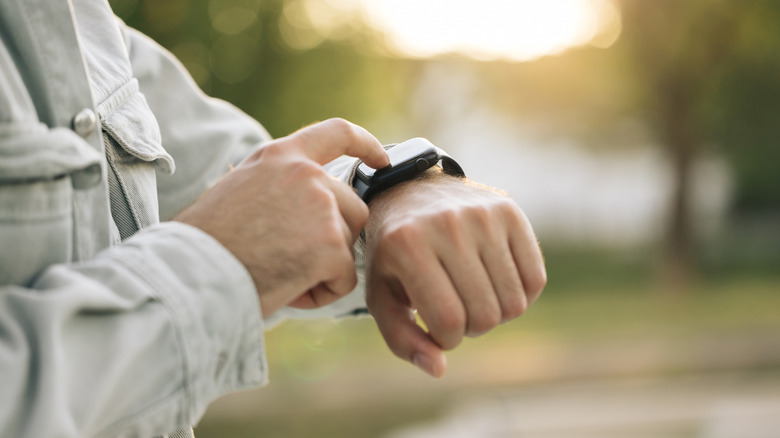
As noted, Apple doesn’t have a specific recommendation for restarting your Apple Watch on any schedule. The company simply notes to do so “if something isn’t working right.” This could be if it’s sluggish, if your essential Apple Watch apps are freezing, or if the touchscreen isn’t responding to taps and swipes. I restart my Apple Watch Series 11, for example, if I repeatedly try to start a workout and the Watch won’t detect my heart rate. Besides that, a software update restart is essential and, as noted, usually done for you upon completion anyway.
However, also consider that if the Watch isn’t syncing with your iPhone and you’re missing notifications, calls, or other updates, you may need to restart both the Watch and your mobile device. The process to do so will depend on your phone model, but for any iPhone with Face ID, just press and hold the side button and a volume button, drag the slider to the right, turn it off, then turn it back on. You can also force a restart of your watch by pressing a sequence of buttons. For the latest iPhone 17 series, quickly press and release the Volume Up button, then press and release the Volume Down button, and finally hold the side button until you see the Apple logo. After rebooting, check whether the connection is back up and running.
How to restart your Apple Watch
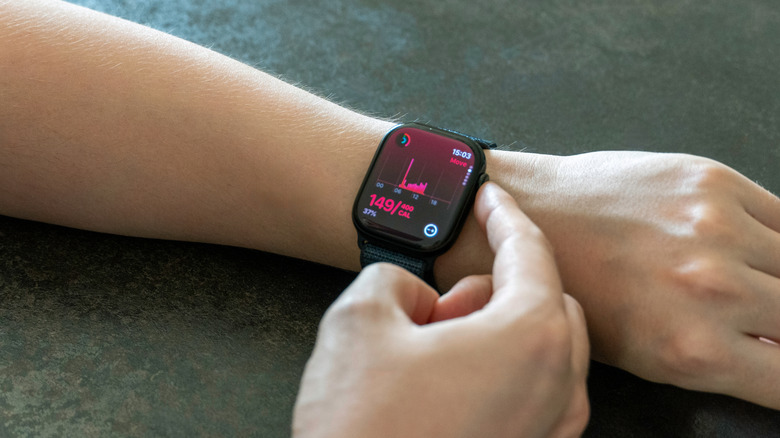
To restart your Apple Watch, press and hold the side button, tap the power icon in the top right, then drag the slider to the right. To turn it back on, press and hold the side button until you see the Apple logo. Note that it can take up to 30 seconds to restart. If the Apple Watch is stuck on an app or the screen has frozen, do a hard restart by holding down the Digital Crown and side button at the same time for about 10 seconds until you see the Apple logo. I do this every few months when I try to start a workout in a third-party app, and it gets stuck on the “start workout, yes or no” screen. Apple advises, however, only to use this method if restarting the watch in the basic way doesn’t work.
The bottom line is that you really only need to restart your Apple Watch when you notice an issue. If apps aren’t delivering notifications, things aren’t being tracked correctly, or the touchscreen seems sluggish or unresponsive altogether, shut it down and turn it back on, or do a force restart if that’s your only option, like if the screen is frozen. If it’s a syncing issue, consider restarting your iPhone as well. It won’t harm your Apple Watch to restart it every now and then as an optimization and maintenance tactic. But unless something is wrong, you don’t have to do so.
