


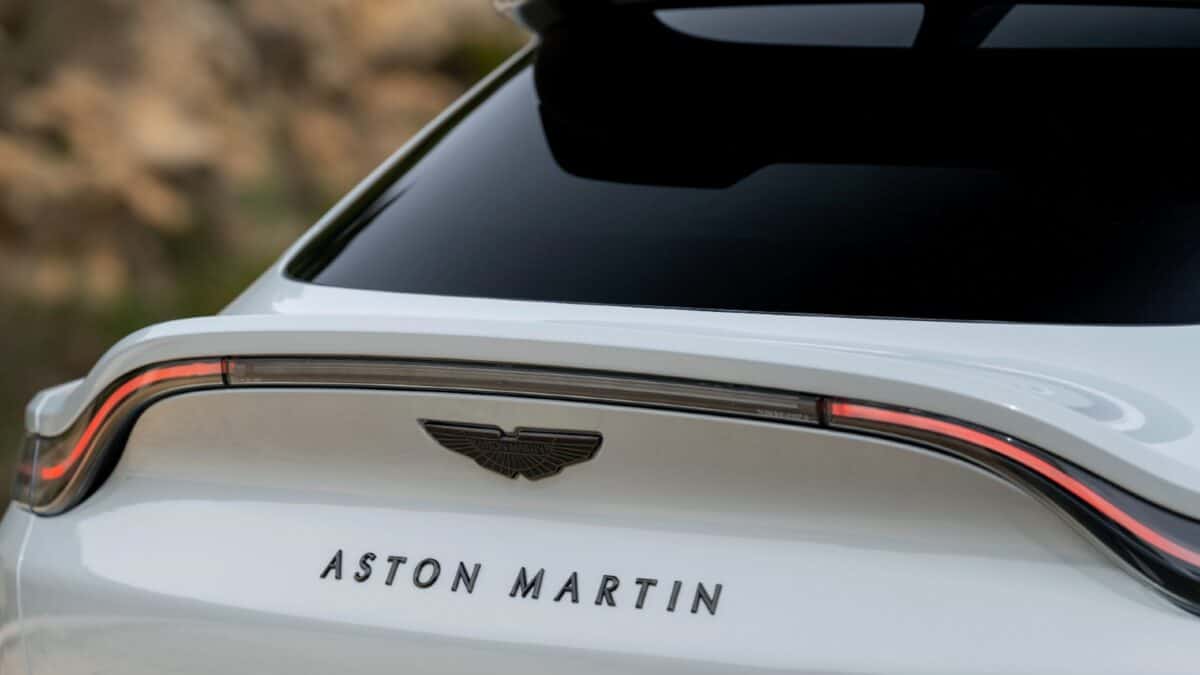
Image source: Aston Martin
Despite its storied reputation, Aston Martin‘s (LSE: AML) shares sell for pennies each.
For some people, that might qualify it as a penny stock. But with a market capitalisation of £641m, it does not meet one common criterion for that name. A penny stock typically trades for pennies, but also has a market capitalisation of under £100m.
Clearly, Aston Martin remains far outside penny stock territory on that basis – for now.
But this is a share that has fallen 45% in the past year alone.
Might it end up as a penny stock?
Horrible value destruction
That would require a further share price fall of around 84%.
Such a fall sounds – and would be – dramatic.
But just as some petrolheads are apt to tear up the road in their wake, Aston Martin has performed horribly as a share. It is down 92% over the past five years.
Of course, the rear view mirror does not tell you what lies on the road ahead. In this case, though, I reckon it can give some useful clues – and the destination could end up being penny stock status.
The share price destruction has come about for several reasons. One is that Aston Martin has burnt through large amounts of cash. It continues to do so, potentially pushing the price down further.
Another reason is that the company has not proven its business model. It continues to lose money at the operating level. That is compounded by its balance sheet, groaning with net debt of £1.4bn at the end of the first half of last year.
Servicing that eats up cash. To help, the company has repeatedly issued new shares, diluting existing shareholders in the process. I see a risk it could so again in future.
Lots of strengths – so what’s going on?
But there is a conundrum here.
Many penny stocks have unproven business models too.
But they also may lack lots of other things, like brand awareness or a commercial scale operation. Aston Martin has those things in spades. It has a legendary brand, a very well-heeled customer base, and exciting motoring technology that means you know an Aston when you see one.
So, why is it losing value so much that it could potentially end up as a penny stock?
Having brilliant assets is one thing. But you need to figure out what to do with them.
Aston Martin has been trying to do this for years, but it is still spilling red ink like nobody’s business.
The operating loss alone was £135m in the first half. Over time, shareholders have increasingly lost faith that the business has attractive financial potential.
Could that change?
I believe it could.
After all, this is a long-established company generating millions of pounds in revenues every week. It has assets no other car maker does. That and its customer base give it significant pricing power.
If it can sell more cars, the company ought also to benefit from greater economies of scale.
But while I think things could change, that will need catalysts. The company has had great potential for years, but failed to turn the corner.
Until there are concrete signs that its business model is generating free cash flow, let alone profits, I will not be investing.
