




Researchers have successfully resurrected a gene that humanity lost millions of years ago. The results could change how we treat common diseases such as gout and maybe even contribute to slowing down aging. Using the gene editing tool CRISPR-Cas9, a team at Georgia State University introduced a reconstructed version of the ancient enzyme gene uricase into human liver cells. The lab tests were a success that hinted at a future where humanity could live without the crippling joint pain caused by gout. The idea is simple yet bold: re-install a piece of our revolutionary past to fix modern-day health issues.
For now, the research is done in petri dishes, not patients. No one has been treated yet, and no human trials have begun, yet the implications are large. The fact that we can now bring back once lost genes means we have a new weapon to fight modern diseases and improve the quality of life.
The ancient gene resurrected

Humans, and our closest relatives, the great apes, once carried a functional gene for an enzyme called uricase. This enzyme helped break down uric acid, a normal waste product of our metabolism. Roughly 20 to 29 million years ago, our ancestors lost that gene. We don’t know exactly why, but some scientists speculate the loss may once have offered an advantage. As humans evolved and their diet changed, elevated uric acid might have helped convert fruit sugar into fat. That would be a useful survival mechanism. But what once helped us survive may now contribute to disease.
That’s why bringing this gene back is so exciting. A research team from Georgia State University has just done exactly that. Led by biology professor Eric Gaucher, along with post-doctoral researcher Lais de Lima Balico, the team revived a reconstructed ancient uricase gene using CRISPR-Cas9 gene editing technology. CRISPR is used to treat cancer, but now we’re also seeing this reconstructed gene added into human liver cells in the lab. The liver cells began producing uricase, which broke down the accumulated uric acid. What’s even more interesting is that when these cells were exposed to fructose, they didn’t turn it into fat, as the typical liver cells would.
To go beyond simple cell culture, the research team tested the ancient gene in three-dimensional liver spheroids, miniature lab-grown tissues that behave more like real human organs. The revived uricase enzyme worked there, too. The levels of uric acid dropped, and the buildup of fat was prevented. The resurrected gene might help humans restore their natural metabolic pathway that could protect us from modern diseases linked to high uric acid, especially gout and fatty liver diseases.
Beyond gout and fatty liver
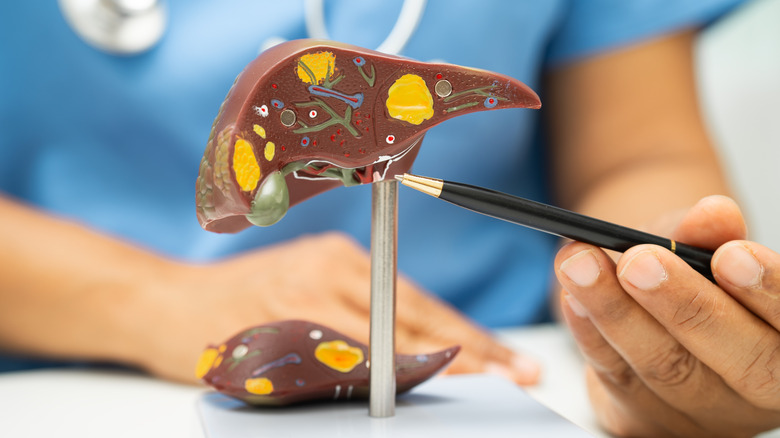
Uric acid does much more than cause gout. High levels of uric acid in the blood, called hyperuricemia, are linked to many modern diseases. It raises the risk of high blood pressure and heart disease. It’s also tied to chronic kidney disease, and is correlated with metabolic syndrome and the buildup of fat in the liver. The fact that lowering uric acid levels has improved outcomes in some trials connected to hypertension and cardiovascular diseases suggests a causal role. That’s what makes this revived ancient CRISPR gene a potentially powerful weapon against many diseases.
The Georgia State University team is now planning to move from the lab to human trials. Next comes the animal testing phase. The team has already started planning the gene delivery to lab mice. They could use systems such as nanoparticles to carry CRISPR components or the gene itself. This is the same technology used in some of the COVID-19 vaccines, and it proved to be efficient. If animal studies are successful, researchers will move to carefully designed human trials.
However, the testing will take time. The researchers need to prove that the gene is stable, doesn’t trigger harmful immune reactions, and works long-term. They also need to come up with a safe delivery method that is controlled and reaches the targeted cells. The road ahead might be long, but it is clear. The benefits could be successful treatment of gout, fatty liver disease, and other conditions tied to high uric acid levels.
