Oracle is now at the center of two very different dramas in Washington. One is about saving TikTok from a U.S. ban, and the other is about how far the software giant can go with its balance sheet to pay for the AI boom.
On one hand, ByteDance, TikTok’s Chinese parent company, has finally agreed to a long-awaited deal, Reuters reported. The agreement gives a new joint venture, comprised of American and global investors, control of the app’s U.S. operations.
Oracle will be in charge of security and the cloud.
On the other hand, CNBC reported that a $10 billion AI data center project in Michigan that was supposed to fuel OpenAI has run into trouble.
It seems that Blue Owl Capital, a major financing partner, allegedly pulled out, causing Oracle’s shares to drop temporarily and placed its expanding debt burden under scrutiny.
The message for investors is mixed: Oracle is becoming a key part of U.S. digital infrastructure for both AI and social media, but it has to make big long-term investments to keep that position.
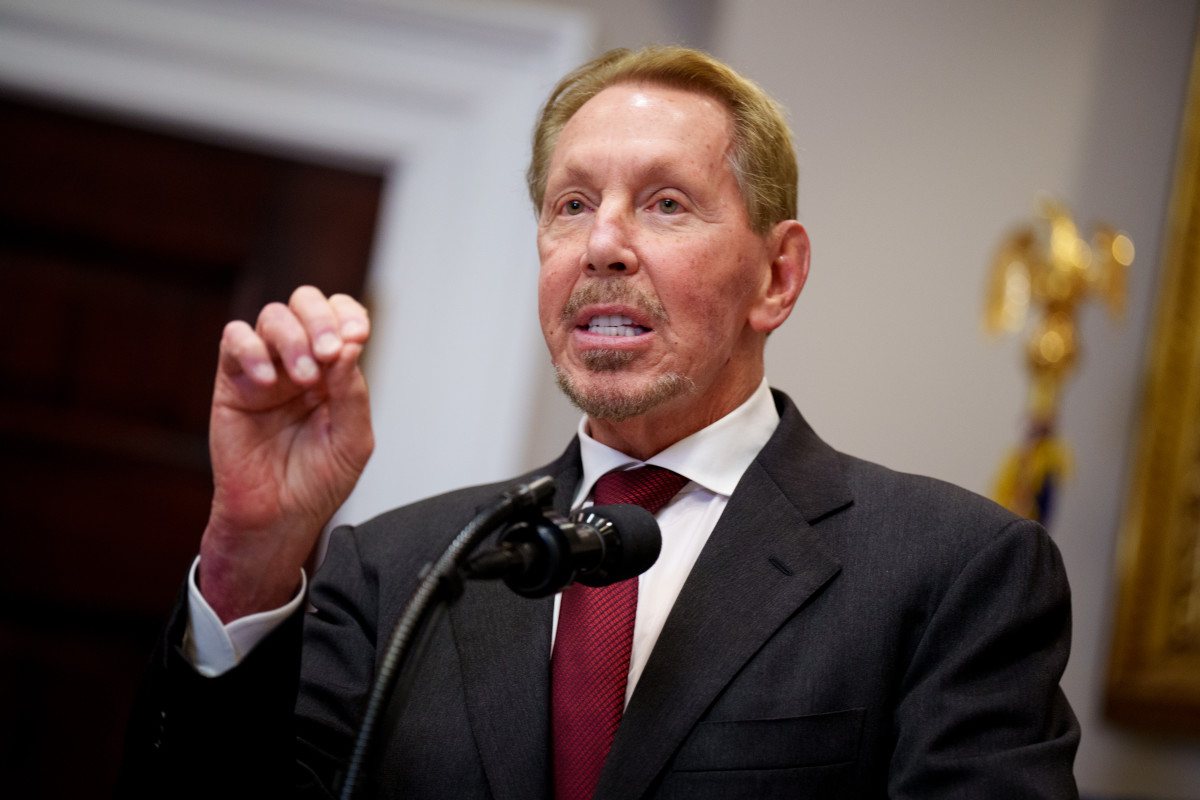
Oracle is leaning into political and tech risk in ways it has rarely done before.Hirano/SOPA Images/LightRocket via Getty Images
Washington’s decision to prohibit TikTok in 2020 because of national security concerns put the app’s future in the U.S. on the line. The story may finally be coming to a close.
ByteDance has made legally binding deals to launch a new company in Texas called TikTok USDS Joint Venture LLC, which will run the app’s U.S. platform, Barron’s reported.
American and international investors, such as Oracle, the private equity firm Silver Lake, and the Abu Dhabi-based company MGX, will own 80.1% of the joint venture. ByteDance will own 19.9% of the enterprise.
Related: Nvidia’s China chip problem isn’t what most investors think
The deal checks several boxes that lawmakers and regulators have demanded:
A board made up mostly of Americans (seven members, with ByteDance choosing only one).
Oracle runs what TikTok calls a “trusted and secure cloud environment” in the U.S. to store user data.
The joint venture has its own power over U.S. data protection, algorithm security, content moderation, and software assurance.
The deal is due to conclude on Jan. 22, 2026, and it is meant to comply with a regulation that would otherwise prohibit TikTok in the US unless its assets were properly removed from Chinese management.
It’s politically dangerous. President Donald Trump, who has more than 15 million followers on TikTok and says the app helped him win reelection, supports the joint-venture approach. Critics like Sen. Elizabeth Warren, on the other hand, warn that it could lead to a “billionaire takeover” that gives Trump-aligned business interests more control over what Americans watch.
But for Oracle, the structure represents a strategic win:
It becomes TikTok’s “trusted security partner,” checking and confirming that the company is following national security rules.
It locks in a flagship cloud client on a social platform with around 170 million U.S. users. This is a sticky, high-visibility workload that can show off Oracle’s infrastructure on a large scale.
The new U.S. company is worth around $14 billion. That’s not a lot compared to TikTok’s worldwide reach, but it’s still a big enough deal for Oracle’s cloud business to use as a reference client.
Related: You won’t believe what Coca-Cola just did with its coffee brand
The open question is: How clean is the separation? Entities owned by ByteDance will still handle worldwide product compatibility and money-making activities like advertising and e-commerce.
That dual-track approach might keep TikTok’s Chinese owner closely connected to the app’s money-making engine, while Oracle takes care of the U.S. data and algorithm barrier.
If TikTok is a major success, Oracle’s week also included a less favorable development.
Blue Owl Capital, a big investor in Oracle’s data center build-out, has said it won’t pay for a planned $10 billion, one-gigawatt facility in Saline Township, Michigan, that will serve OpenAI workloads. Reports say that the private credit company backed out because they were worried about the deal’s debt conditions, repayment structure, and the danger of political instability in the area.
Investors focused on one number: $248 billion, according to CNBC. As a result, Oracle shares fell by nearly 5%. That’s how much the corporation has to pay for long-term leases on data centers and cloud space over the next 15 to 19 years. This number has grown quickly as Oracle tries to stay up with its hyperscale competitors.
Related: Intel CEO deals spark controversy, debate
On top of that:
In September, Oracle took on almost $18 billion in additional debt.
Total debts, including operational lease liabilities, exceeded $124 billion as of Nov. 30.
Oracle has entered into a significant, long-term cloud collaboration with OpenAI, Reuters reported, potentially worth up to $300 billion over a five-year period.
It’s easy to understand why a lender may not want to take on another big project on top of that capital stack.
Oracle hit back, stating that the Michigan facility is still “on schedule” and that its development partner picked a new equity investor following a competitive procedure. The corporation says that Blue Owl is no longer involved in the negotiations.
Blackstone is in talks to become a possible replacement equity partner, Financial Times reported. This shows that a lot of money still wants to invest in AI infrastructure, but only at the right price and under the right conditions.
Still, this event shows a major problem in the Oracle story: The same aggressive spending that helps it go after big agreements with OpenAI and others also makes the balance sheet more subject to interest rates, credit spreads, and any drop in AI demand.
The two headlines from Oracle convey a deeper tale about where the business wants to fit into the tech stack.
On the one hand, the TikTok joint venture positions Oracle as a crucial component of U.S. digital sovereignty, enabling Washington to maintain a politically sensitive service without granting Beijing control over the data. That’s a strong position, and the cloud and security income that comes with it should be high-margin and steady.
More AI Stocks:
The Michigan incident, on the other hand, shows that Oracle is working hard to pay for the AI land grab. Even if Blue Owl is replaced swiftly by a new partner, the market has been reminded that not all investors are happy with the way Oracle is building up its business with borrowed money.
Oracle might have a closer connection with one of the world’s most important consumer platforms if TikTok’s U.S. cloud, data, and security work goes well.
Its AI data center pipeline still looks promising, with significant interest from OpenAI and other major companies.
Political risk is still significant since future administrations, regulators, and politicians from both parties are keeping a close eye on TikTok and AI concentration.
Oracle’s expanding debt and leasing obligations make execution even more important. If AI demand drops or costs go over budget, it may hurt profits and multiples.
In the short term, Wall Street will probably see the TikTok announcement as a little plus for Oracle’s cloud story, but it will also be keeping a watch on the company’s capital discipline and financing costs.
If Oracle can convert TikTok into a showpiece for its security-first cloud and demonstrate that it can fund big initiatives like Michigan without going too deep into debt, the stock might come out of this week’s turmoil looking stronger, not weaker.
Related: US Navy bets $448M on Palantir AI to speed shipbuilding