


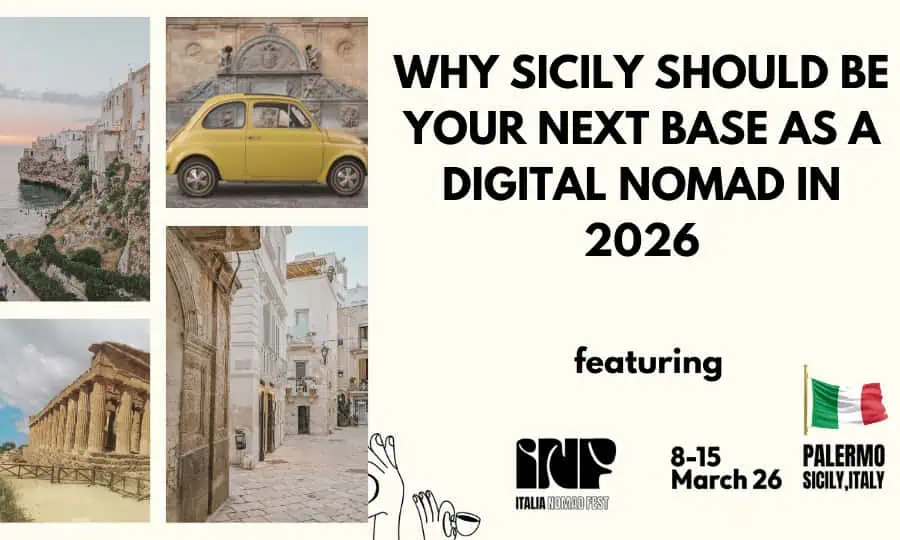
I haven’t been to Sicily just yet, but I will be going to the Italia Nomad Fest, believing this will be my perfect introduction to this italian island.
Like many of you, I’ve been seriously tempted by the idea of swapping my current setup for an Italian island life. To get a real sense of whether it’s a viable base or just a holiday fling, even before going there, I couldn’t wait, and I’ve been doing some research into the experiences of remote workers who are actually on the ground there right now.
The consensus paints a picture of a destination that is incredibly rewarding but distinctly different from the plug-and-play nomad hubs we are used to like Lisbon or Bali.
From what I’ve read, the biggest decision revolves around where to set up camp, with the community split largely between Catania and Palermo.
Catania seems to be the choice for those who want a “real” city vibe; people describe it as a bit gritty and energetic, with a university scene and a surprising amount of tech industry presence.
On the other hand, Palermo is often pitched as the better option due to its flight connections , alongside a slightly more cosmopolitan feel. While smaller spots like Ortigia in Siracusa look visually stunning in photos, the advice from long-termers is that they can feel a bit too tourist-centric and isolating for a multi-month stay unless you are looking for serious solitude. Also, Oritigia is very small, and you won’t have a chance to meet so many fellow travelers.
What strikes me most about the feedback is the warning about the social scene. The repeated lines I hear is that Sicily is not a place where you can get by easily inside an “expat bubble.” Unlike other major hubs, there isn’t a massive, pre-existing community of English-speaking nomads waiting to welcome you. The advice is clear: you need to learn some Italian to thrive there. I found that a bit strange, because I heard otherwise from my sources. There’s a huge expat community on the island, so the locals are speaking more English now than before. Knowing Italy, it’s probably advised to learn some super basic Italian; however, I don’t think nowadays their English is that bad.
Nevertheless, I’d be tempted to say that without the language, people report feeling a bit lonely and struggling to make deep connections with the locals, despite how friendly everyone is generally described to be. I will have to discover that myself!
The lifestyle trade-offs seem pretty clear-cut. On one hand, you get an incredible cost of living, a relaxed pace of life, and food that is universally praised as legendary. On the other hand, a few nomads mentioned a surprising downside: “food fatigue.” Because the local cuisine is so dominant, it’s apparently quite hard to find good international variety, so if you crave spicy Asian food or diverse dining options, you might find yourself out of luck outside the major cities. The verdict seems to be that Sicily is perfect if you want deep immersion and a slower life, but it might be a struggle if you’re looking for a convenient, English-first nomad experience
The financial and bureaucratic side of things is where the conversation gets really interesting. Everyone is talking about the potential tax incentives for new residents, with some claiming you can get a massive reduction in taxable income if you navigate the paperwork correctly. However, the infrastructure sounds like a mixed bag. This seems to be annoying for a lot of people over there.
While home internet seems reliable enough for Zoom, the coworking culture hasn’t really taken off yet, and I’ve read reports of spaces closing down post-pandemic. It sounds like this is a place where you need to be comfortable working from your Airbnb or kitchen table rather than relying on a trendy shared office.
