


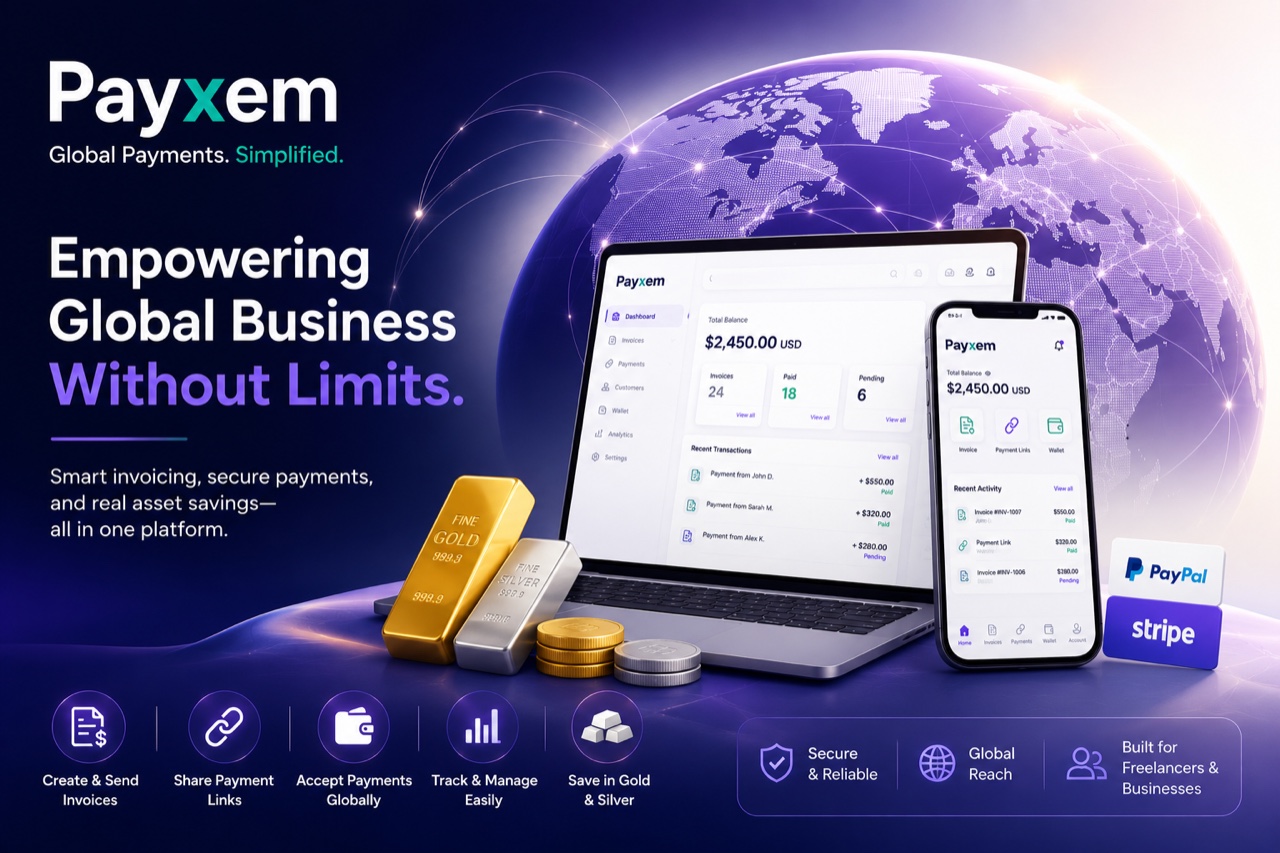
Freelancer software has gotten very good at one job: getting paid. But getting paid is only half of running a freelance business. The other half is being found, being trusted, and being able to send a new client to one professional place that says, “this is what I do, and this is how to hire me.” The Payxem portfolio bet is built on exactly that gap.
Instead of treating invoicing and portfolio as two separate problems solved by two separate tools, Payxem combines compliant invoicing with a no-code portfolio builder, both living under a single user handle the company calls the “Digitalancers” platform.
The fragmented stack most freelancers use
Picture a typical freelancer’s setup: Notion or Squarespace for a portfolio, PayPal or Stripe for payments, a spreadsheet for invoices, a Linktree for social, a WhatsApp number for chat. Clients meet a different identity at every touchpoint, and the freelancer pays for several tools that barely talk to each other. For early-career freelancers in emerging markets, where each tool is either unavailable or priced in dollars, that fragmentation is a real barrier.
What the Payxem portfolio unlocks
Payxem gives each user a personal payment URL like app.payxem.com/p/yourname and a free portfolio at username.payxem.com, complete with services, gallery, testimonials, FAQ and stats. The same handle drives a “Pay Now” flow when a client decides to hire, funnelling straight into a Payxem invoice or payment link. Two things happen: brand and money flow through one surface, and clients get a single, low-friction path from “interesting profile” to “paid.”
Why the UAE is a useful base
The UAE has spent years building itself into a serious home for cross-border freelancers, with long-term visas, no income tax, English-first business and stronger compliance norms. Payxem leans into that, with identity verification, encrypted authentication, biometric login and multi-currency support across 52-plus currencies, including card, bank and crypto.
The honest trade-off
Combining a portfolio and a payment platform is a strong idea, but it means depending on one platform for two things freelancers used to spread across vendors deliberately. Downtime or pricing changes would expose both presence and income at once. Payxem counters with free withdrawals, transparent pricing and an XEM points rewards program that returns value as account credit, but deeper trust will be earned over time through reliability and support.
Why it matters beyond freelancers
If the Payxem portfolio model works, it is a small example of a bigger shift: the next generation of business tools will be built around identities, not features. Freelancers first, then service SMEs and creators. That the UAE is quietly a base for that experiment is part of why the country is interesting beyond its headline AI and infrastructure stories. The live product is at payxem.com.
