



Here is what readers should know about guide for visas travel, in plain language. The wider context, the practical takeaway, and the parts that matter most for everyday decisions.
You book a one-way flight because that’s how nomad life works. You’re heading somewhere new, your dates are loose, and you don’t want to lock in a return you might never use. Then the airline agent asks for proof of onward travel, or the visa checklist demands a flight itinerary before you’re ready to buy the ticket.
That’s where people start googling what is a dummy flight ticket, usually with a mix of urgency and suspicion.
The short version: a dummy ticket isn’t a scam when it’s done properly. It’s a temporary flight reservation used to show planned travel without paying for a full ticket upfront. Used well, it’s one of the most useful admin tools in a digital nomad’s kit, right up there with a good eSIM, cloud backups, and a coworking day pass when your apartment Wi-Fi dies.
The Onward Ticket Problem Every Nomad Faces
The classic version goes like this. You’ve got a one-way ticket into Bali, Chiang Mai, or Mexico City because you want flexibility. Maybe you’re testing a coliving spot for a month. Maybe you’re waiting on a visa decision. Maybe you just don’t know where you’re going next yet.
Then check-in staff asks for onward travel.
That request catches people off guard because it feels backwards. You’re ready to travel, you’ve paid for the inbound flight, and you still can’t move forward without showing how you’ll leave. It gets even messier when passport validity rules stack on top of entry rules. If you’re traveling on a UK passport, it’s worth checking the UK passport 6-month rule before you fly, because passport validity and onward proof often get checked in the same conversation.
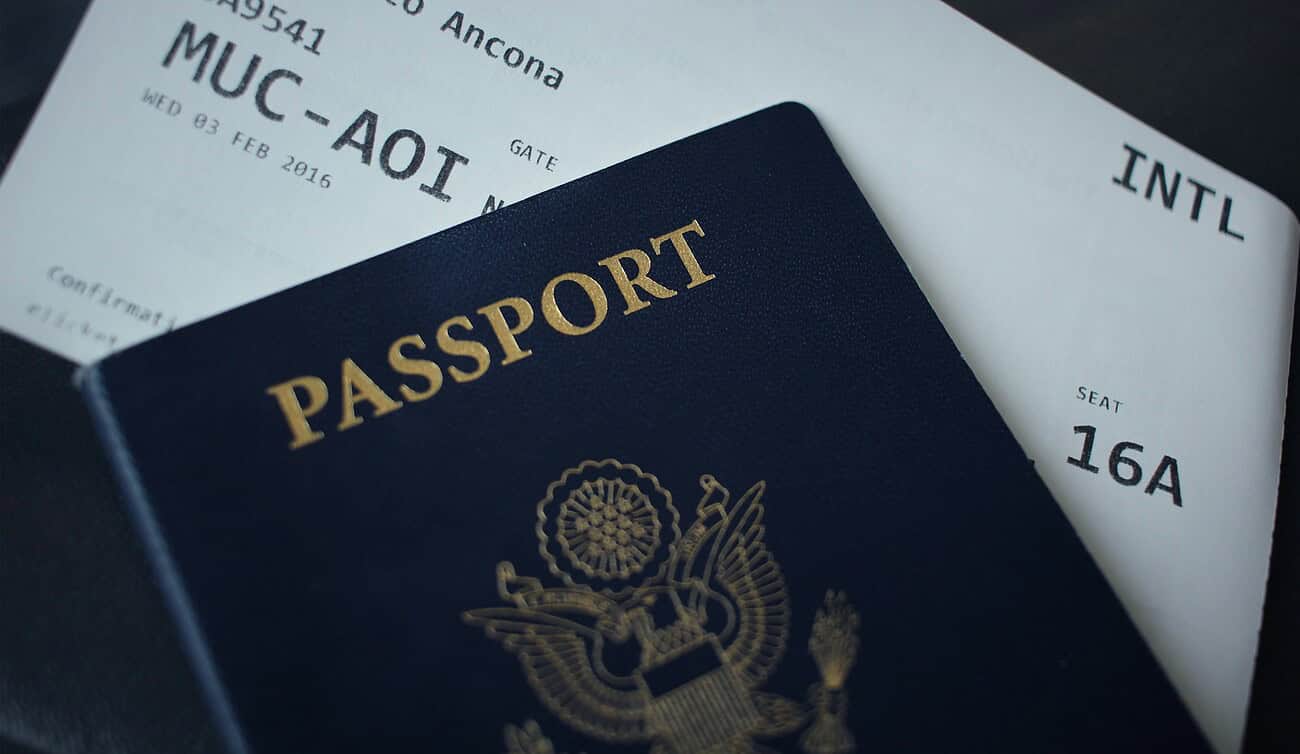
A dummy ticket solves that problem neatly. It gives you a reservation you can show for visa paperwork, border checks, or airline check-in without forcing you to buy a full fare too early. That’s why seasoned travelers keep this option in their back pocket.
Why this matters more for nomads
A tourist with fixed dates can just book the return and move on. A nomad usually can’t.
Your plans depend on visa approvals, apartment availability, client work, weather, and whether the city you picked works for daily life. That’s why a temporary reservation is often the practical move, not a workaround.
Coffee-shop version: A dummy ticket is what you use when official travel rules demand certainty, but your real life still needs flexibility.
If you’re comparing approaches, this roundup of onward ticket resources for nomads is a useful starting point.
Is a Dummy Ticket Legal and What’s the Catch
You’re at check-in with a one-way ticket, the agent asks for proof you’ll leave the country, and now the wording matters a lot.
A real dummy ticket is a live flight reservation in an airline system. It usually comes with a PNR and can often be verified. A fake ticket is just a document made to look real. That difference is the whole legal line.
The legal part
Using a real reservation for visa paperwork or onward-travel proof is generally legal because you’re submitting an actual booking record, not an invented one. The problem starts when travelers edit PDFs, change dates by hand, or use confirmations that do not exist in any airline or GDS system.
That is why I treat dummy tickets as a tool, not a shortcut. Used properly, they solve a timing problem. Used carelessly, they can turn into document fraud fast.
The safer standard is simple. If an airline, embassy, or agent can verify the booking reference and see a real hold or reservation, you are on solid ground. If the document only looks convincing in your inbox, skip it.
What the catch actually is
The main risk is not legality. It is expiration.
Most dummy tickets stay valid for a short window, and that window does not always line up with when an embassy reviews your file or when an airline agent decides to check the booking. I have seen travelers buy one too early, show up later, and discover the reservation died overnight. At that point, the paper is useless even if it looked perfect when it was issued.
The second catch is provider quality. Some services sell proper hold bookings. Others send polished PDFs with weak or nonexistent verification behind them. If you spend any time reading Reddit threads about providers, including chatter around Dummy Ticket 247, you’ll see the same pattern. Some travelers report smooth results, others question whether the booking stayed live long enough to be useful. That does not mean every complaint is accurate, but it does mean you should verify the reservation yourself instead of trusting the PDF.
Here’s the practical split:
| Type | What it is | Safe to use |
|---|---|---|
| Real dummy ticket | Temporary reservation with a live PNR | Yes, if the booking is verifiable when checked |
| Fake ticket | Edited or invented document with no airline backing | No |
| Paid e-ticket | Fully ticketed booking with an e-ticket number | Yes, for actual travel |
What airline staff or immigration may notice
Staff may see that the booking is reserved rather than ticketed. That alone is not unusual. Some embassies and check-in agents only want proof of onward intent, and a real reservation can satisfy that.
What they will not like is a booking that cannot be found.
So the catch is operational. Timing, verification, and choosing a provider that gives you a live reservation instead of a pretty attachment. If you want a clearer breakdown of the red flags, this guide to fake flight ticket issues is useful before you submit anything.
One last warning. A dummy ticket is for proof, not for boarding. You still need a fully paid, ticketed flight if you plan to fly.
When to Use a Dummy Ticket for Your Nomad Lifestyle
The best use cases are all about protecting flexibility while still meeting rigid travel rules. In places popular with remote workers, proof of exit is mandatory in 85% of countries, including Thailand, Indonesia, and Mexico, as reported by this guide on onward travel requirements.
Visa applications before you’re ready to commit
This is the cleanest use case.
You’re applying for a visa and the embassy wants a flight itinerary, but buying a confirmed ticket now would be reckless. Maybe your visa dates aren’t final. Maybe you’re still waiting on accommodation. Maybe you want to choose the airline later once approval comes through.
A temporary reservation gives you a document that fits the application without tying up money in the wrong flight.
Entering on a one-way ticket
This happens all the time with nomads.
You book the inbound route because you know where you’re going next month, not three months from now. The airline checking you in may still insist on seeing onward proof before they let you board. In that moment, a dummy ticket is less about immigration theory and more about getting past the counter without last-minute panic-buying a bad flight.
Visa runs and messy transitions
Sometimes your plans are in-between. You’re exiting one country, re-entering another, or bridging time while a longer-stay option gets sorted. In such situations, rigid round-trip logic falls apart.
A temporary reservation gives you a placeholder that satisfies the paperwork side while you keep your actual route open.
A simple way to decide
Use one if all three are true:
- You need proof now: airline, embassy, or border staff asked for it.
- Your real plans aren’t fixed: dates, route, or destination may change.
- You don’t want to risk a premature ticket purchase: especially on expensive or awkward routes.
Practical rule: If the document is for compliance, not for boarding, a verifiable reservation is usually the right tool.
For broader visa logistics, this FAQ on digital nomad visa questions helps connect the onward-ticket issue to the rest of the application puzzle.
How to Buy a Dummy Ticket The Right Way
You do not want to be testing a dummy ticket while standing at an airport counter or rushing to upload documents before a visa deadline. The right time to catch problems is five minutes after purchase, with your laptop open and the airline site in front of you.
Price matters less than verification. A proper service usually charges a small fee because it is creating a live temporary reservation, not just emailing you a polished PDF. If a provider looks suspiciously cheap, treat that as a warning and check what you are getting.

Start with the provider, not the route
At this stage, travelers get sloppy.
Search terms like dummy ticket reddit, dummy ticket 247 reddit, and dummy ticket 247 can be useful because Reddit threads usually reveal the same practical details. Did people get a live PNR? Did support fix name errors fast? Did the booking hold long enough for the intended use?
That said, Reddit is only a screening tool. It is good for spotting patterns, especially when a provider has repeated complaints about dead PNRs or slow support, but it does not replace checking the booking yourself.
Use this filter before you pay:
- Live PNR stated clearly: the provider should say the reservation can be checked on the airline website
- Exact name matching: your first name, surname, spacing, and middle names must match your passport
- Validity window explained: you need to know how long the reservation is likely to stay active
- Support that answers quickly: useful if a date or spelling issue needs correction on short notice
- Clear delivery format: you should receive an itinerary with airline, route, dates, and booking reference, not just a generic-looking document
Enter your details like you are booking a real flight
The buying process is simple, but small errors can cause big problems. Enter your name exactly as it appears on your passport. No abbreviations. No reordered surnames. No skipping middle names if your travel documents use them consistently.
A good provider will ask for the route, date, and passenger details, then send the reservation by email. If the form feels vague or does not ask for enough information to match a real booking, that is another warning sign.
Verify the booking yourself on the airline site
This is the part that separates a usable dummy ticket from a useless file.
As explained by DummyFlights’ guide to checking a dummy ticket, the correct move is to open the airline’s own Manage Booking page, enter the PNR and your last name, and confirm that the reservation appears there. You are looking for an active itinerary record. You are not looking for a paid e-ticket.
A normal dummy reservation often shows as held, reserved, or on hold. It usually will not show a 13-digit e-ticket number, because no ticket has been issued yet.
Quick verification checklist
- Go to the airline’s official website.
- Open Manage Booking, My Trips, or the equivalent page.
- Enter the PNR and your surname.
- Confirm that the passenger name and route match exactly.
- Check that the reservation status looks active or on hold.
- Confirm you are seeing a booking record, not a fabricated PDF with no airline trace.
If the airline site cannot find the booking, stop there. Do not send it to an embassy. Do not rely on it for check-in. Ask for a fix or get a refund.
What usually works in practice
A few habits make this process much safer:
- Buy the reservation close to when you need to show it
- Verify the PNR as soon as it arrives
- Save both the PDF and a screenshot of the live airline record
- Use providers with a visible track record of replacing bad bookings quickly
And a few things regularly go wrong:
- Buying too early and letting the hold expire before submission
- Using a provider that only sells a document mockup
- Assuming a clean-looking itinerary means the booking is real
- Forgetting that support speed matters as much as price
For a side-by-side breakdown of services, risks, and use cases, this guide to proof of onward travel and dummy flight ticket tools is worth checking before you choose a provider.
Free and Smart Alternatives to a Dummy Ticket
Sometimes a paid dummy ticket is the right answer. Sometimes it isn’t.
For digital nomads dealing with residency or onward-travel proof, alternatives like airline schedule holds, often free through apps like Kayak, and blockchain-verified itineraries are seeing a 40% rise in adoption among freelancers as reported by DummyTicket247’s guide.

Options worth considering
A few alternatives can be cleaner than a standard dummy ticket, especially if you prefer dealing directly with airlines.
- Airline schedule holds: some booking flows let you hold a fare for a short period without full commitment.
- Short cancellation windows: in some cases, travelers book a real ticket and cancel within the allowed window.
- Fully refundable fares: expensive upfront, but simple if cash flow isn’t a problem.
- Blockchain-verified itineraries: newer and less common, but interesting if you want stronger audit trails.
The catch with every alternative is the same. You need to know the exact rules of the airline, route, and timing before you rely on it.
A quick explainer can help if you want to see another walkthrough:
Which option I’d choose
If I need a visa document fast and want the least friction, I’d use a verified dummy reservation.
If I’m dealing with a route where the airline offers a decent hold option, I’d look there first. Direct-from-airline solutions are usually easier to explain if anyone asks questions.
A smart traveler doesn’t just ask “what’s cheapest?” The better question is “what will still hold up when a human checks it?”
Dummy Ticket Frequently Asked Questions
Does a flight reservation mean the same thing as a dummy ticket
Usually, yes. In practice, people use both terms for a temporary, un-ticketed booking used for visa or onward-travel proof.
What happens if the dummy ticket expires
You get a new one. That’s the whole game with these reservations. They’re temporary by design, so you time them around your appointment, submission, or flight.
Can airline staff or embassies tell it isn’t a paid ticket
They can often see it’s a reservation rather than a ticketed booking if they check the record. That isn’t automatically a problem if a reservation is what they asked for.
Can you board a flight with it
No. A dummy ticket is for documentation, not travel. If you reach check-in for the actual flight without a ticketed booking, you’re not flying.
Should you trust free dummy ticket generators
No. If there’s no live booking behind the document, you’re taking a risk for very little upside.
Is Reddit a good place to compare providers
It’s useful for pattern spotting. Searches like dummy ticket reddit and dummy ticket 247 reddit can show whether people consistently report live PNRs, support responses, or failed bookings. Just don’t outsource verification to strangers. Check the booking yourself.
If you want more context around onward-proof strategies, this tag page on proof of onward travel is a solid rabbit hole.
Remote Tribe publishes the kind of travel guidance nomads use, from visas and onward-ticket strategy to destination picks, gear, coliving, and remote work logistics. If you want practical updates instead of recycled travel fluff, check out Remote Tribe.
