


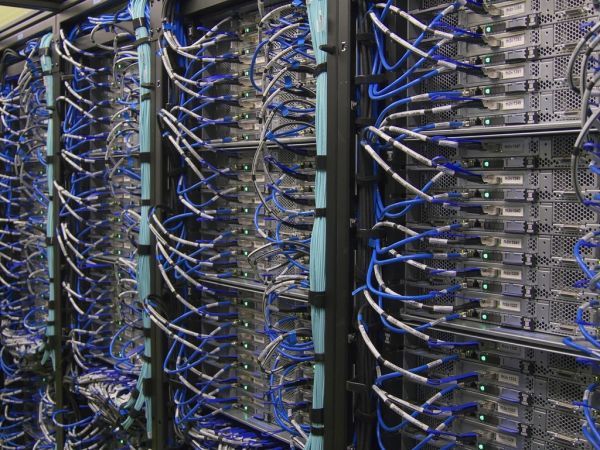
Former President Donald Trump has announced that the United States will impose penalties on domestic technology firms that construct artificial intelligence data centers outside the country. The move, revealed during a recent briefing, signals a shift in how the U.S. government intends to protect its competitive edge in the rapidly growing AI sector. By targeting companies that set up AI infrastructure abroad, the administration seeks to prevent the migration of critical data processing capabilities to rival markets.
US Tech Penalties AI Data Centers: What Is at Stake?
The policy is aimed at companies that build or expand AI data centers in other nations, potentially including the Middle East, Asia, and Africa. The penalties could involve higher tariffs, restricted access to federal contracts, or limits on exporting certain technologies. While the exact mechanisms remain unannounced, officials have indicated that the focus will be on maintaining data sovereignty and ensuring that sensitive AI models remain under U.S. jurisdiction.
Under this framework, firms that relocate their data processing to foreign facilities may face significant compliance hurdles. The policy is designed to curb the outflow of intellectual property that could be leveraged by competitors in countries that are emerging as AI powerhouses. In essence, the U.S. government wants to keep the levers of AI development and data control within its borders.
Industry analysts note that the announcement comes at a time when global demand for AI infrastructure is surging. With massive investments flowing into data centers worldwide, many U.S. firms are already exploring partnerships in countries offering lower real estate costs and favorable tax regimes. The new penalties could alter that calculus, forcing companies to rethink their international expansion plans.
Because AI data centers are energy intensive, many firms have chosen locations that can provide abundant renewable power and cooler climates. Countries in the Gulf, for instance, have attracted projects due to their expansive deserts and low electricity costs. The policy could therefore prompt a reevaluation of these strategic sites, potentially affecting regional economies that have seen a boost from foreign investment.
Beyond the immediate financial implications, there are also regulatory and security considerations. Data residency laws in many jurisdictions require that data and AI models remain within the host country. By enforcing penalties, the U.S. aims to mitigate risks such as data leakage or foreign influence over critical AI systems. This aligns with broader national security concerns that have been highlighted by recent cyber-espionage incidents.
For the companies themselves, the policy underscores the importance of compliance frameworks and supply-chain transparency. Firms will need to conduct thorough risk assessments to determine whether building a data center abroad could expose them to legal or financial sanctions. In some cases, partnering with local entities or setting up joint ventures may offer a way to navigate the new restrictions while still benefiting from international market access.
Meanwhile, policymakers in other countries are watching closely. Nations that have been courting U.S. tech investment may need to adjust their incentives to align with the evolving U.S. stance. This could lead to a rebalancing of global AI infrastructure investment, with potential spill-over effects on trade agreements and cross-border data flows.
In summary, the newly announced penalties for U.S. tech firms that build AI data centers abroad represent a significant policy shift. It reflects concerns over data sovereignty, national security, and the protection of intellectual property. Companies operating in the AI space will need to reassess their expansion strategies, weigh the risks of penalties, and develop robust compliance plans. Readers should keep an eye on how the policy is implemented, the specific penalties that will be applied, and the broader impact on global AI infrastructure investment.
This article provides general information and is not financial advice. For tailored guidance, consult a qualified professional.
Image: Openverse (public domain)
