


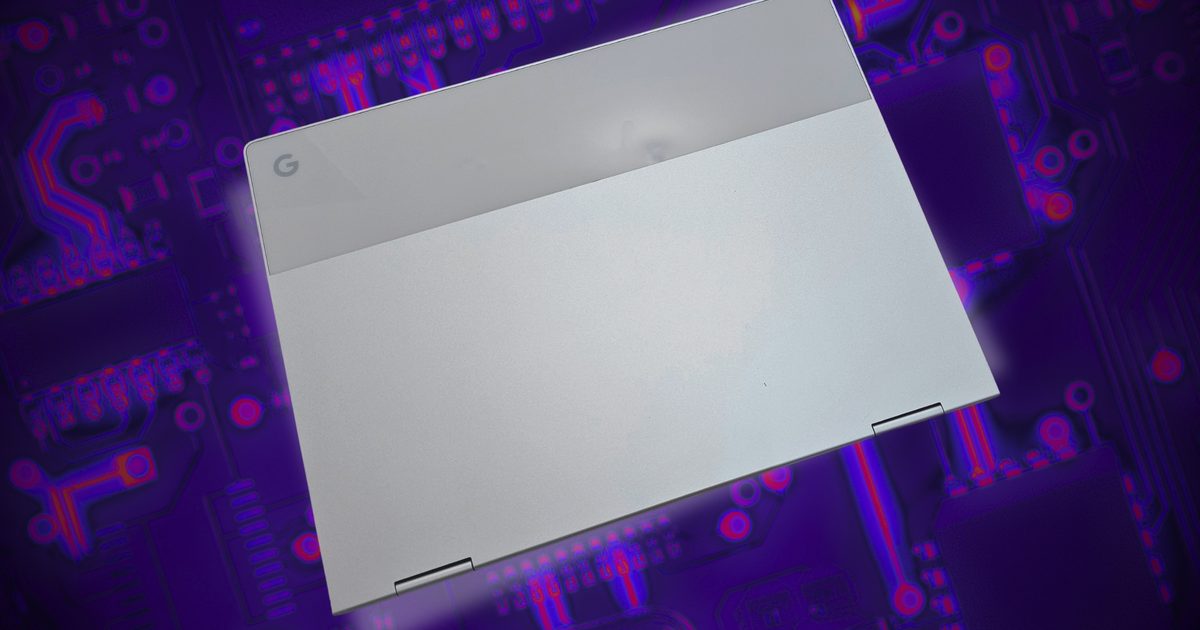
A Google Pixel laptop might be on its way, but does anyone actually want one? keeps showing up in conversations for a reason. The story below covers what is actually happening, where the trade-offs sit, and what a careful reader should take from it.
It looks like a new member is joining the Pixel family, adding to its resurgent smartphone lineup. Code analysis of the latest Android beta points toward a new Pixel laptop that Google might be planning to launch soon. Google last launched a laptop, the Pixelbook Go, in 2019, an affordable version of the Pixelbook it put on the shelves back in 2017.
Both the Pixelbook and Pixelbook Go, along with the earlier Chromebook Pixel models, were not what you would call a smash hit with the audience or a runaway commercial success. Ultimately, they triggered Big G’s departure from the laptop segment and a shift in focus toward Pixel smartphones.
The tides are shifting, and it seems ChromeOS is on its sunset ride.
Snippets spotted in Google’s software suggest we might finally see Google’s latest attempt at a laptop, but without the expected Chromebook foundations. Instead, it could be the showcase ride for an entirely new class of machines running Aluminium OS. That said, a Google Pixel laptop does not make much sense right now, as several factors work against it. As one charismatic wrestling star would go, “let me talk to ya” on this!.
Google’s history of failure with past laptop launches
Let’s be fair (read: historically accurate) here. Google doesn’t have a particularly enviable track record with making laptops. The company took several stabs at making a laptop in the past decade, starting with the Chromebook Pixel in 2013, an upgraded Chromebook Pixel in 2015, the Google Pixelbook in 2017, and the Pixelbook Go in 2019.

None of these laptops could set the computing segment on fire or set any long-lasting industry trends, owing to two main factors: pricing and the underlying operating system.
A history of bad pricing at Google
| Device model | Price starting at |
| Chromebook Pixel (2013) | $1,299 |
| Chromebook Pixel (2015) | $999 |
| Pixelbook | $999 |
| Pixelbook Go | $649 |
As you can see from the table, all Google laptops commanded a premium, with launch prices around the $1,000 mark. At that price, you could get a powerful Windows laptop or even a MacBook Air. Why would anyone want to pay that much for a laptop running ChromeOS?
Only the Pixelbook Go launched at around $649. Our review praised its portable design, hardware, and excellent battery life. However, the conclusion remained the same: the software held it back, as you could get a full-fledged Windows PC at that price point.
I plonked $1,649 on the top-end variant with the Core i7 variant, and it’s now eating dust in my drawer. Not because I don’t want to keep it running. The laptop is just utterly slow, and despite numerous hard resets, it won’t even handle Chrome smoothly without stuttering, running utterly hot, and the screen has lost its touch-sensitivity, too.
The state of ChromeOS in 2026
Well, that was nearly a decade ago, but what about now? Maybe ChromeOS has improved enough to go toe to toe with other desktop operating systems? Sadly, the answer is no. If anything, Google seems to have left the operating system in limbo with no drastic improvements.

Yes, there have been pockets of updates here and there, but nothing substantial that makes it a viable competitor. It’s still a browser-based operating system with minimal support for popular creativity and productivity apps. With the scrapping of Google Stadia, gaming is also now almost defunct on ChromeOS.
On the other hand, Linux has improved by leaps and bounds, can run on similar low-powered hardware, and supports gaming and the most popular creative and productivity apps. In fact, Linux is at an all-time high among Steam gaming die-hards. Yes, ChromeOS has simplicity of use in its favor, but that’s about it.
What about the upcoming Aluminium OS?
There is, however, a glimmer of hope on the horizon. Google is working on a new operating system called Aluminium OS, with an expected launch window of 2026. It aims to merge Android and ChromeOS into a single unified platform.
Built on Android from the ground up, it promises native support for all Play Store apps with proper keyboard and mouse support, alongside desktop-grade window management features. It will even support multiple desktops.
The highlight feature of the OS will be Gemini AI, which will supposedly be baked into the core of the OS, which is a significant step up from ChromeOS. That said, Aluminium OS could push forward with its own set of problems, if ChromeOS is anything to go by.

First, it would require more powerful hardware to power the AI features. Ideally, it would need a silicon with a powerful AI accelerator chip (aka NPU) to handle AI-driven tasks, especially those that are executed on-device. Imagine translation, photo editing with generative AI, scam detection, and more, without an internet connection.
Second, since it is based on Android, you will still not get support for full-fledged desktop apps. You might be able to run them using a translation layer, something Apple did with Rosetta when it switched to its own ARM-based processors for Macs, but how well it will work is a big question mark. Windows on ARM has been a mess and only recently started becoming a real possibility.
I can’t imagine Aluminium OS will fare any better in its first swing at serious computing.

Built-in Gemini AI will be the highlight of this new operating system, and hopefully, it will be better than the Windows implementation of Copilot AI and the lackluster Apple Intelligence execution in macOS. This could give Aluminium OS a leg up over the competition, but the fundamental issue, which is a lack of desktop app support, is a problem Google will have to figure out soon, or the new OS will suffer the same fate as ChromeOS.
Rising RAM and SSD prices
By now, it should be clear that the only way a next-generation Google laptop can succeed is by lowering its price. But that might be harder to achieve in today’s market, thanks in no small part to the RAMmageddon that has wreaked havoc in the PC industry and spilled over into the smartphone and gaming segments as well.

With the rising prices of RAM and SSDs, thanks to AI infrastructure gobbling up the world’s supply, the cost of electronics is climbing exponentially. Microsoft has raised prices on its Surface laptops, Sony and Nintendo have raised prices for the PS5 and Nintendo Switch 2 consoles, and Samsung has increased its phone (and laptop, and tablet) prices.
And these are just a few examples. Every other laptop manufacturer has climbed the price ladder, much to the obvious displeasure of buyers and even triggering a panic purchase spell, as reported by Counterpoint Research. Unfortunately, industry trends suggest it will only get worse before it gets better. And we’re not just talking about new products here.

It might be the first time in history that a gaming console, phone, or laptop costs more in 2026 than it did at launch. In such an unprecedented market, I do not see a way for Google to cut prices on its new laptops, especially with the powerful system requirements for running Aluminium OS, without significantly jeopardizing other aspects of its hardware, which was the only good thing about the older Google laptops.
The MacBook Neo exists at $599
Google’s Aluminium OS foundations sound promising, but they just got a pre-emptive reality check from Apple, in the form of MacBook Neo. If the reportedly upcoming Google laptop existed in a vacuum, there might have been a chance it could succeed.
Last month, Apple did something it had never done before in its history and launched an affordable MacBook starting at just $599. Despite its shortcomings and the corner-cutting Apple had to do to hit that price point, the MacBook Neo turned out to be an excellent laptop, receiving rave reviews all around and selling like hotcakes.

Now, let’s do a thought experiment. If you had to choose between a Pixelbook and a MacBook Neo at $599, a price point Google has never hit before, by the way, which one would you choose?
I would argue that nearly everyone would choose the MacBook Neo. The only thing going in favor of the Pixelbook over similarly priced Windows laptops was its hardware design, and it won’t have that same advantage over the MacBook Neo.
The MacBook Neo features a full metal body, a good display, a quality keyboard, and a best-in-class touchpad. Google will be hard-pressed to build a laptop that good, with that kind of performance, and still hit the $599 price point.

Not to mention, you get the full desktop experience with MacBook Neo because it runs macOS. Even if the new Google laptop is powered by the upcoming Aluminium OS, it will still lack support for desktop apps. Yes, the experience might be better than ChromeOS, but there’s no chance it can compete with a mature operating system like macOS.
Chromebooks sell so well largely because they hit a sub-$300 price point for the education market. But think a year or two ahead, when the current MacBook Neo is selling for $350 or $400 in the resale or refurbished market. Who would buy a Chromebook then?
Does a Chromebook, let alone a Pixelbook, make sense now?
The only reason ChromeOS holds a significant share of the market is due to its education programs and strong ties with schools across the US. If Apple can crack that code and partner with school boards to offer the MacBook Neo as a replacement, the days of ChromeOS are numbered.
Even if Apple doesn’t succeed in schools, MacBook Neo has ensured that the days of premium ChromeOS laptops are over. The upcoming Aluminium OS might be the answer Google is hoping for, but I am skeptical. And that’s why I do not think a new Google laptop makes sense right now. Or ever.
