


Refresh
The labor market remains steady
Jobs reports have been volatile this year, but the overall picture of the labor market is one that’s healthy but slowing.
In March, nonfarm payrolls jumped by 178,000, nullifying the downwardly revised decline of 133,000 jobs from February. In January, the U.S. added 126,000 new jobs.
“Gains were widespread in March. Private employment rose an even stronger 186,000,” writes David Payne, staff economist and reporter for The Kiplinger Letter, in his Kiplinger jobs outlook. “Health care and social assistance was back to its usual strong hiring, adding 90,000. Leisure and hospitality added 44,000. Other hires included 26,000 in construction, 20,000 delivery drivers, 15,000 in durable goods manufacturing and 10,000 in retail.”
The unemployment rate came in at 4.3% in March.
“The robust March jobs report should dissipate concerns at the Federal Reserve that the economy might be weakening,” says Payne. “That means that rate cuts are off the table for the moment, at least until a new Fed chair takes over, possibly in May.”
– Karee Venema
March CPI came in hot as energy prices spiked
The ongoing conflict between the U.S., Israel and Iran has caused oil prices to spike to their highest level in four years and gas prices to soar above $4.00 per gallon, putting a quick halt to the decelerating inflation trend we’ve seen in recent years.
This was evidenced in the March Consumer Price Index (CPI) report, which showed a big boost to headline inflation.
According to the Bureau of Labor Statistics, headline CPI rose 0.9% from February to March, and was 3.3% higher year over year. This marked the highest annual increase since May 2024.
The results came in much higher than February’s figures of 0.3% and 2.4%, and exceeded economists’ estimates for a 0.8% monthly increase and a 3.1% annual rise.
Rising energy costs were the main reason behind the hot headline number. “The index for energy rose 10.9 percent in March, led by a 21.2-percent increase in the index for gasoline which accounted for nearly three quarters of the monthly all items increase,” explained the BLS.
“This may be the best headline inflation number we see for a while as it may only partially capture the full force of the Iran conflict, which sent U.S. crude and U.S. gas up 70% at peak,” said Alexandra Wilson-Elizondo, Global Co-CIO of Multi-Asset Solutions at Goldman Sachs Asset Management. “We believe the Fed will look through the energy-driven noise so long as these factors hold. The Fed has room to be patient, and every reason to do so.”
Core CPI, which excludes volatile food and energy prices, rose 0.2% from February to March, matching economists’ expectations. Year over year, core inflation came in at a slower-than-expected 2.6%.
– Karee Venema
Read more: March CPI Report: Iran War Lifts Inflation to a 2-Year High
Who gets to vote at the April Fed meeting?
The Federal Open Market Committee (FOMC) has 12 total members, eight permanent and four who rotate each year.
The eight permanent voting committee members include the Fed chair and vice chair, the five Fed governors and the president of the New York Fed.
Four regional Fed presidents are rotated in each calendar year.
The 2026 FOMC voting committee consists of:
Fed Chair Jerome Powell*
Vice Chair Philip Jefferson
Fed Governor Michael Barr
Fed Governor Michelle Bowman
Fed Governor Lisa Cook
Fed Governor Stephen Miran**
Fed Governor Christopher Waller
New York Fed President John Williams
Cleveland Fed President Beth Hammack
Minneapolis Fed President Neel Kashkari
Dallas Fed President Lorie Logan
Philadelphia Fed President Anna Paulson
In 2027, the presidents from Chicago, Richmond, Atlanta and San Francisco will rotate in as FOMC voting members, according to the Federal Reserve.
* Jerome Powell’s term as Fed chair is up on May 15, 2026
** Stephen Miran’s term as Fed governor was up on January 31, 2026, but he will continue to serve in the role until a successor is approved
– Karee Venema
Stocks are slightly lower to start Fed week
The main equity indexes are down slightly to start the week as market participants look ahead to Wednesday’s policy announcement from the Fed and a busy stretch of Big Tech earnings.
After notching new all-time closing highs on Friday, the tech-heavy Nasdaq Composite and broader S&P 500 are down 0.2% and 0.1%, respectively. The blue-chip Dow Jones Industrial Average is off -0.1%.
Looking for more timely stock market news to help gauge the health of your portfolio? Sign up for Closing Bell, our free newsletter that’s delivered straight to your inbox at the close of each trading day.
Oil prices, meanwhile, were last seen higher, with front-month West Texas Intermediate crude futures up 1.9% to $96.16 per barrel. Over the weekend, President Donald Trump canceled plans for in-person negotiations in Pakistan between the U.S. and Iran.
– Karee Venema
The policy backdrop is complicated right now
The Federal Reserve is widely expected to keep interest rates unchanged at the next Fed meeting. Not only is it Powell’s last as Fed chair, but central bankers are trying to balance a complicated policy backdrop.
“On one hand, inflation has not yet fully returned to target, and the renewed rise in energy prices tied to the Iran conflict adds another layer of uncertainty,” says Yulia Alekseeva, Head of Fixed Income at MissionSquare. “On the other hand, growth appears to be moderating, and there are early signs that the labor market may be losing some momentum beneath still-resilient headline data.”
So policymakers are navigating a “narrow path,” she explains — one where easing too soon could accelerate inflation, but “tightening preemptively” could create unnecessary headwinds for the economy.
“As a result, this meeting is less about whether the next move is a cut or a hike in the near term, and more about avoiding the wrong move altogether while preserving optionality,” Alekseeva concludes.
– Karee Venema
When does Jerome Powell’s term as Fed chair end?
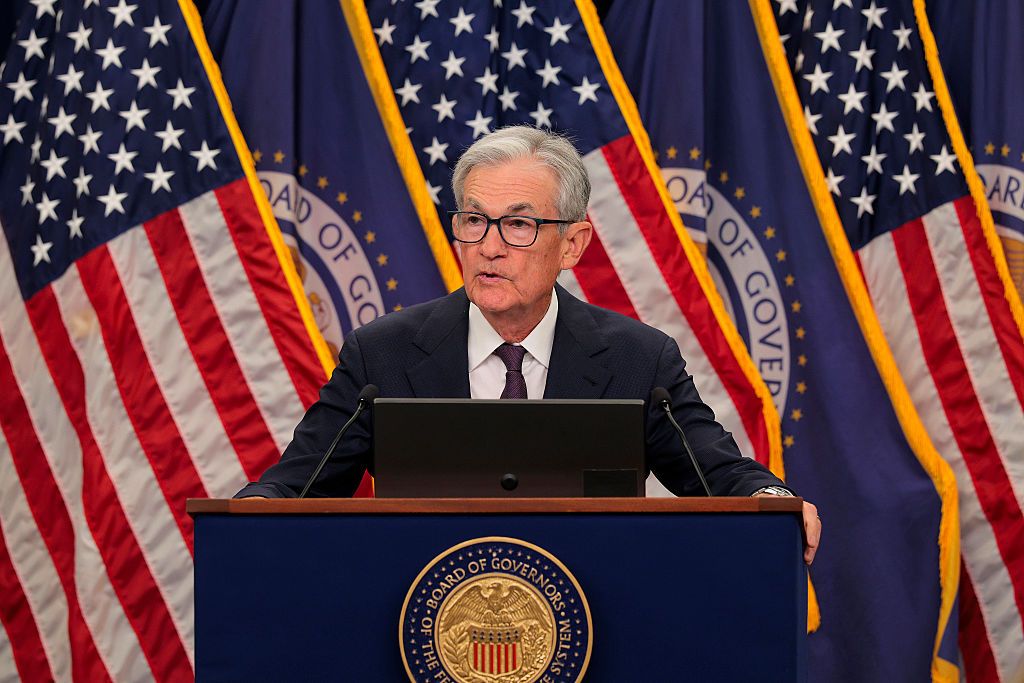
Jerome Powell’s term as Fed chair is up on May 15, 2026.
In January, President Trump nominated Kevin Warsh to replace Chair Powell once his term is up. “Warsh was Fed Chair Ben Bernanke’s right-hand man during the 2008-09 global financial crisis and was his primary liaison to Wall Street, which earned him credibility he still retains,” writes Kiplinger investing editor David Dittman. “Markets see Warsh as a source of stability should Trump continue to pressure the central bank. He served on the Federal Reserve Board from February 2006 through March 2011.”
With Warsh likely to be approved by the Senate, this makes the April Fed meeting the last for Jerome Powell as Fed chair.
Powell’s term on the Board of Governors of the Federal Reserve runs through January 31, 2028. He has yet to confirm whether he will step down as Fed governor once his term as chair is up, as is customary. Rather, at the March Fed meeting, Powell said that he has “no intention of leaving the Board until the investigation is well and truly over, with transparency and finality,”
– Karee Venema
The next Fed meeting will be Powell’s last
On Friday, the Department of Justice (DOJ) dropped its investigation into Jerome Powell. The probe, launched in mid-January, threatened a criminal indictment related to Fed Chair Jerome Powell’s testimony before the Senate Banking Committee last June about a multi-year project to renovate historic buildings.
Sen. Thom Tillis (R-North Caroline) said he would not vote to advance Kevin Warsh’s nomination as Federal Reserve chair as long as the investigation continued, calling it “a bedrock principle of Fed independence.”
Indeed, President Donald Trump has relentlessly criticized Chair Powell for not lowering interest rates, leaving many to speculate that the DOJ’s investigation was a means of strong-arming the central bank.
But on Friday, U.S. Attorney Jeanine Pirro posted on X that she has directed her office to close its investigation of Powell and the Fed — clearing the way for Tillis to help move Warsh to a full Senate vote.
That vote is likely to come soon. Indeed, the Senate Banking Committee is scheduled to vote on Warsh’s nomination this Wednesday, April 29, at 10 am Eastern Standard Time.
– Karee Venema

Karee Venema
With over a decade of experience writing about the stock market, Karee Venema is the senior investing editor at Kiplinger.com. She joined the publication in April 2021, and oversees a wide range of investing coverage, including content focused on equities, fixed income, mutual funds, ETFs, macroeconomics and more.
Fed meeting schedule for 2026
The next Fed meeting, which runs from April 28 through April 29, marks the third gathering of 2026.
“The committee meets eight times a year, or about once every six weeks,” writes Kiplinger contributor Dan Burrows in his feature, “When Is the Next Fed Meeting?“.
The Federal Open Market Committee “is required to meet at least four times a year and may convene additional meetings if necessary,” Burrows adds, noting that “the convention of meeting eight times per year dates back to the market stresses of 1981.”
Fed meetings last two days and wrap up with the release of a policy decision at 2 pm Eastern Standard Time. This is typically followed by the Fed chair’s press conference at 2:30 pm.
Here is the full remaining Fed meeting schedule for 2026:
April 28 to 29
June 16 to 17
July 28 to 29
September 15 to 16
October 27 to 28
December 8 to 9
