


South Korea’s financial regulators are preparing a new tool to buffer the nation’s equity markets from sudden downturns: a stock stabilization fund. The move comes as global markets have tightened and domestic stocks have recorded sharp declines, prompting a debate about the role of government intervention in stabilising markets.
Stock Stabilization Fund: Seoul’s Market Safety Net
At its core, a stock stabilization fund is a reserve that can be deployed to buy shares when prices fall below a certain threshold. The idea, borrowed from practices used in advanced economies, is to dampen volatility, boost investor confidence, and prevent a self-reinforcing sell-off. In South Korea, the fund would be managed by the Korea Exchange and backed by a mix of public and private capital.
Financial officials say the fund will be activated only under specific conditions, such as a market drop of more than 3% over a single day or a sustained decline over a week. When triggered, it would purchase a predetermined percentage of the largest stocks, thereby supporting prices and signalling that the market is not left to the whims of speculation alone.
Why the timing? Over the past year, the KOSPI has slipped under the pressure of weak global growth, rising U.S. interest rates and regional geopolitical uncertainties. The recent plunge in March, where the index fell more than 4% in a single session, highlighted the fragility of investor sentiment. In response, the Financial Services Commission and the Korea Exchange have convened a task force to finalise the fund’s framework and funding sources.
From a policy perspective, the fund is a middle ground between free-market mechanisms and outright price controls. It is designed to be temporary and proportionate, avoiding the pitfalls of direct intervention that can distort price signals. Critics argue that any form of market support could create moral hazard, encouraging riskier behaviour among traders who expect a safety net. Proponents counter that the fund’s transparent criteria and limited scope mitigate such risks while providing a crucial buffer during turbulent periods.
Investors, particularly those in the UAE and Gulf who hold South Korean equities, should note the fund’s potential impact on short-term volatility. While the fund will not influence long-term fundamentals, it may smooth out the daily swings that can erode portfolio value. Traders employing algorithmic strategies will need to adjust their models to account for the possibility of state-backed purchases during market stress.
For the broader economy, the fund could have a stabilising effect on capital flows. A less volatile market attracts foreign investment, which is vital for South Korea’s export-driven growth. Moreover, by protecting the equity market, the fund indirectly supports corporate financing, as companies rely on market valuations to raise capital for expansion and innovation.
Looking ahead, several factors will determine the fund’s effectiveness. The size of the reserve, the speed at which it can be deployed, and the transparency of its operations will all influence investor confidence. Regulators plan to publish quarterly reports on the fund’s usage and holdings, ensuring that stakeholders can assess its impact over time.
For readers in the UAE, South Africa, India and the wider African region, the South Korean example offers lessons on how emerging markets can use targeted interventions to safeguard financial stability. As global volatility persists, similar mechanisms may surface elsewhere, making it essential to monitor their design and execution closely.
In conclusion, the stock stabilization fund represents a pragmatic approach to mitigating market shocks without compromising the integrity of the price discovery process. While it is not a panacea for all market risks, it provides a safety net that could preserve investor confidence and foster sustainable growth. Investors should keep an eye on the fund’s activation thresholds, funding levels and regulatory disclosures to gauge its real-world performance.
Note: This article provides general information and is not financial advice.
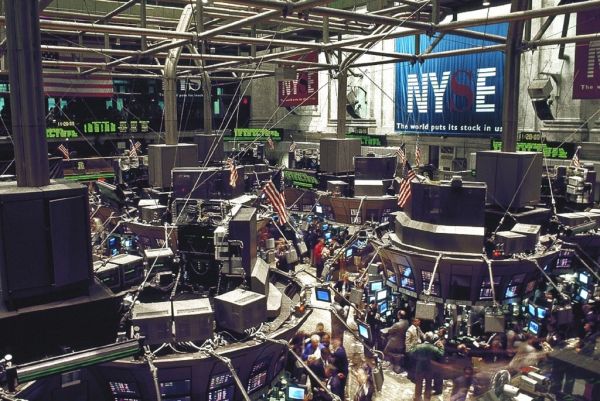
Image: Openverse (public domain)
