

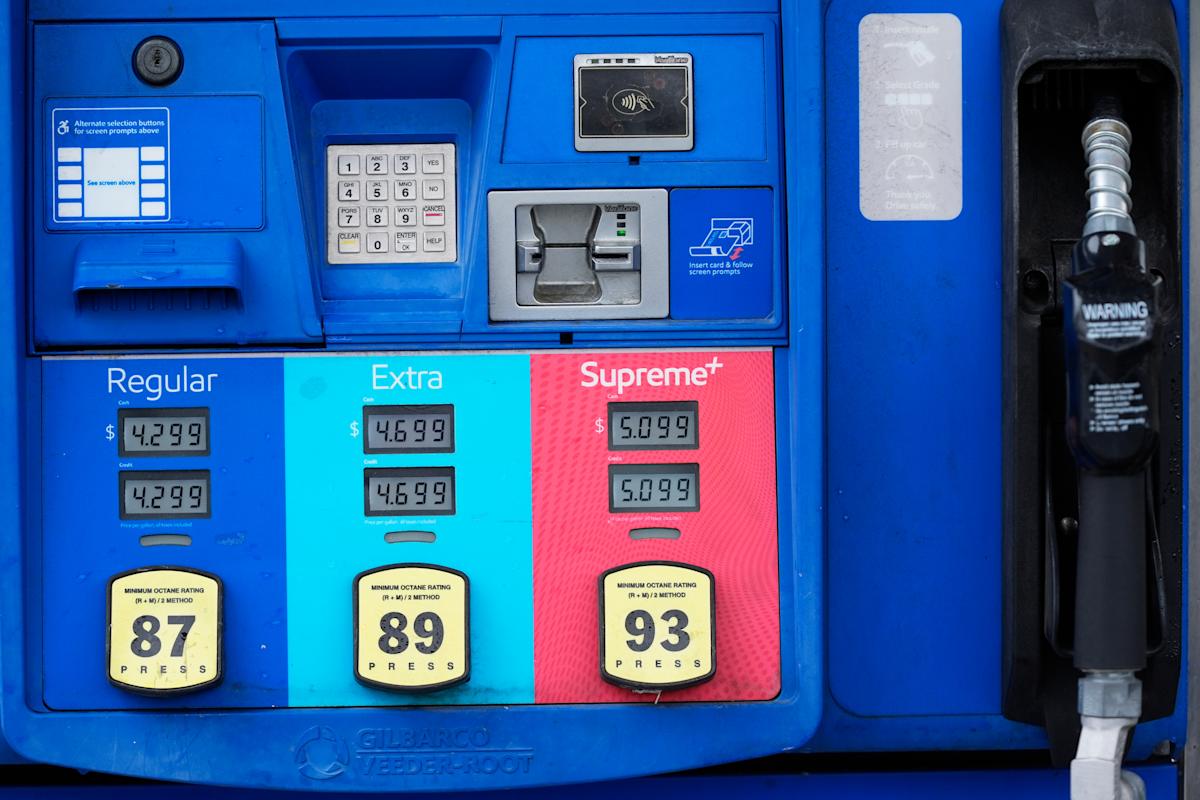
Global energy prices remain elevated, and Americans continue to feel the pain of paying at the pump amid ongoing tensions in the Middle East.
The latest CPI data showed a 21.2% month-over-month increase in gasoline prices in March — the largest monthly increase since the CPI was first published in 1967. The national average price for a regular gallon of gasoline hit $4.118, and the average cost of diesel continues to creep up toward $6 per gallon.
Recently, news of the temporary, two-week ceasefire positively impacted global markets and oil prices, but drivers have yet to feel any meaningful relief. Meanwhile, the Strait of Hormuz remains virtually closed, and markets are focused on any signs of further talks between the U.S. and Iran.
Read more: Gas tops $4 and diesel is over $5. How an extended war with Iran could push prices higher.
Changes in crude-oil prices have the power to impact gas prices fairly quickly; however, the comedown from a gasoline price spike isn’t always immediate.
While oil prices are certainly a key indicator of how gas prices may increase or decrease, it is just one of many factors that can play a role in how much you pay at the pump. Other factors, such as refining costs, disruptions in gasoline distribution, and retailers’ price markups, can slow the rate at which gas prices return to normal after a spike.
“There is a saying that pump prices rise like a rocket and fall like a feather, and that holds,” said David Doherty, head of natural resources research at BloombergNEF. “It takes about three weeks for crude price rises to be fully felt in the price of gasoline prices, and it can take as much time for them to decline as refiners face an uncertain landscape when it comes to the price of crude, their main ingredient.”
Doherty says prices will spike very quickly if the ceasefire breaks down.
“Markets are already very apprehensive about the developments in the Gulf, and at $95-$100 per barrel, they are pricing in some skepticism,” Doherty said. “If the world were not disrupted by this, we would expect the fair value of Brent oil to be closer to $65 per barrel.”
As of now, there is no real resolution to the ongoing conflict in the Middle East that would be needed to start regulating volatility in the oil market.
On April 7, as the conflict entered its fifth week, President Trump announced a two-week temporary ceasefire agreement between the U.S. and Iran, demanding the “complete, immediate, and safe opening” of the Strait of Hormuz.
Stocks soared after this announcement, and oil prices dropped to well below $100 per barrel for the first time since the start of this conflict. However, concerns remain about this ceasefire and whether tankers are truly safe to cross as Iran continues to keep a chokehold on traffic passing through the Strait, with some reports of tolls being imposed on tankers crossing the Strait.
President Trump responded in a post on Truth Social, stating: “They better not be and, if they are, they better stop now.”
In the days following the ceasefire announcement, ship-tracking data have shown only a handful of ships crossing the Strait each day, compared to more than 100 per day before the war. Over the weekend, peace talks in Islamabad ended without an agreement, and the U.S. military announced its plans to block all Iranian ports — sending oil prices back above $100 a barrel.
In an interview with Fox News’s “Sunday Morning Futures,” President Trump said that gasoline prices could still be elevated by the midterm elections.
“Gas prices are still running on adrenaline, not fundamentals. The more excitement, the higher the spike, with crude driving roughly half the move,” said Maksim Sonin, an energy executive who works with Stanford University’s Center for Fuels of the Future.
“No one is rushing to be the cheapest in town,” Sonin said. “Margins tend to expand across the chain while the window is open. Some relief may come, but it will likely be location-specific, with weeks stretching into months, to settle. And longer still if another wave of adrenaline is around the corner.”
Read more: Best credit cards for gas
Here at home, steps are being taken at the federal level to ease the financial burden of higher gas prices on everyday Americans.
This includes the government’s emergency EPA waivers, which allow nationwide sales of E15, gasoline blended with 15% ethanol, and the removal of all federal impediments to selling E10, gasoline blended with 10% ethanol, across the country. The EPA says this move will prevent disruption in America’s fuel supply by keeping E15 on the market and giving Americans more fuel options.
Additionally, in March, the Trump administration ordered the release of 172 million barrels of oil from the U.S. Strategic Petroleum Reserve (SPR) alongside the 32 member countries of the International Energy Agency, who unanimously agreed to release a total of 400 million barrels of oil from their emergency reserves to address the global disruption.
Read more: What’s the Strategic Petroleum Reserve, and can it help lower gas prices?
At the state level, some states are implementing fuel tax holidays to help residents trim their costs.
Experts say that, given the current situation in the Strait of Hormuz, it’s unclear exactly when prices will fall. “Obviously, the situation at hand has really impacted our ability to accurately predict beyond the situation,” said Patrick De Haan, the head of petroleum analysis at GasBuddy, in an interview with Yahoo Finance. “I still tend to believe that things could normalize three to six months from now. Our previous 2026 fuel outlook called for gas prices falling below the $3 mark later this year. Obviously, the current situation may negate a little bit of that.”
The good news: De Haan said that, generally speaking, it only takes a couple of days for oil price changes to be passed through to the retail level.
In the meantime, there are several ways consumers can take matters into their own hands to save money on fuel.
-
Join fuel rewards programs: If you frequent a particular gas station, see if it offers a fuel rewards program you can join to start accruing rewards or earn a few cents off each gallon.
-
Comparison shop: Stopping at your nearest gas station may prove to be the most convenient option for gas, but it may not be the most cost-effective. Before you pump gas, shop around and compare stations to ensure you’re getting the best possible price.
-
Get a credit card with gas rewards: If you’re in the market for a new credit card, consider opting for one that offers cash back or points every time you fill up to help minimize the toll of elevated gas prices on your budget.
Read more: How a gas card can help you navigate high prices at the pump
