

Close Menu
Finsider

    Subscribe to Updates

    Get the latest creative news from FooBar about art, design and business.

    What's Hot

    AI data center startup Fluidstack in talks for $1B round at $18B valuation months after hitting $7.5B, says report

    April 15, 2026

    History says there’s a good chance we haven’t seen the stock-market lows yet

    April 14, 2026

    The Top AI Apps Consumers Are Actually Using

    April 14, 2026
    Facebook X (Twitter) Instagram
    Trending
    • AI data center startup Fluidstack in talks for $1B round at $18B valuation months after hitting $7.5B, says report
    • History says there’s a good chance we haven’t seen the stock-market lows yet
    • The Top AI Apps Consumers Are Actually Using
    • The red lights are flashing again for Lloyds’ share price! Here’s why
    • Google app just launched on Windows, and it wants to pull a Spotlight trick from Macs
    • When will gas prices go back down?
    • Filing Taxes Last Minute? 8 Things to Double-Check Before You Submit to the IRS
    • Daniel Moreno-Gama is facing federal charges for attacking Sam Altman’s home and OpenAI’s HQ
    Facebook X (Twitter) Instagram Pinterest Vimeo
    Finsider
    • Markets & Ecomony
    • Tech & Innovation
    • Money & Wealth
    • Business & Startups
    • Visa & Residency
    Finsider
    Home»Lifestyle»Titan’s Methane Lakes Could Form Bubble-Like Structures Essential to Life, Scientists Say
    Lifestyle

    Titan’s Methane Lakes Could Form Bubble-Like Structures Essential to Life, Scientists Say

    FinsiderBy FinsiderJuly 21, 2025No Comments4 Mins Read
    Share Facebook Twitter Pinterest LinkedIn Tumblr Reddit Telegram Email
    Titan's Methane Lakes Could Form Bubble-Like Structures Essential to Life, Scientists Say
    Share
    Facebook Twitter LinkedIn Pinterest Email

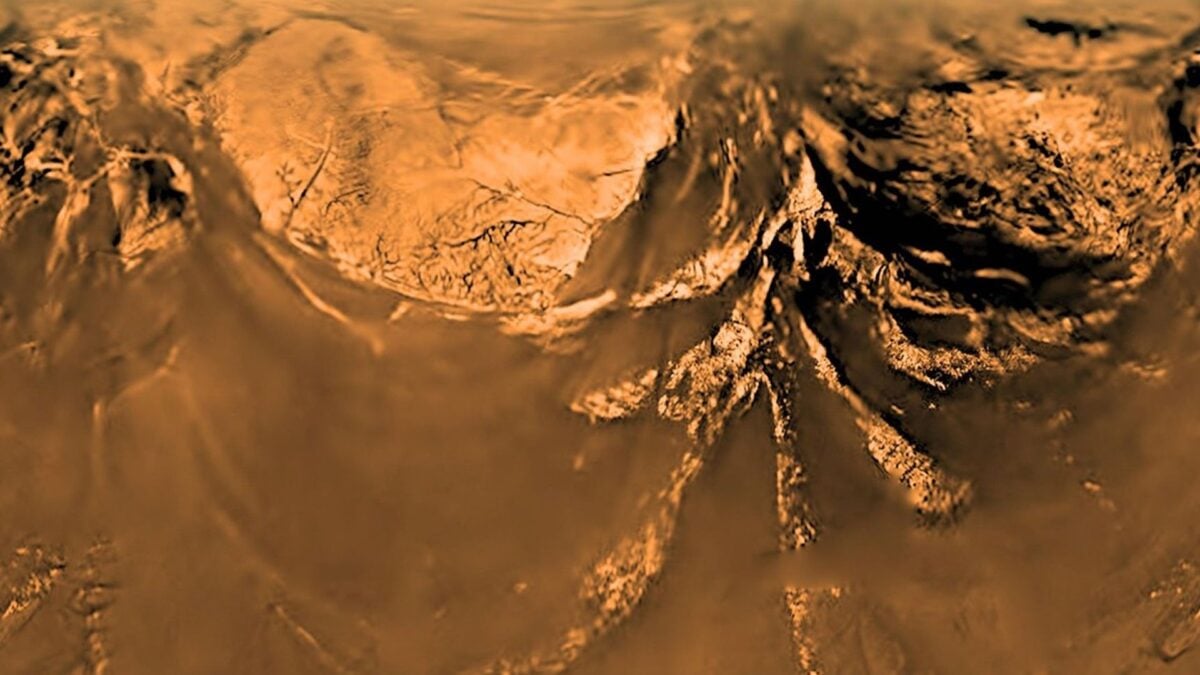
    On December 25, 2004, the Huygens probe separated from the Cassini spacecraft and landed on Titan’s sandy surface. The probe survived for 72 hours on Saturn’s largest moon, revealing a world that is chemically complex and more Earth-like than expected. For years, scientists have been intrigued by Titan as an alien world that might have the right conditions to host life, albeit in a very different form than on Earth. New research by NASA reveals that molecular precursors to life could form in Titan’s methane lakes, allowing us a chance to learn how life originates and evolves in the universe.

    In a recently published paper in the International Journal of Astrobiology, a team of NASA researchers illustrates how vesicles, small, membrane-bound bubble-like compartments or sacs, could form naturally in the lakes of Titan. Vesicles are thought to play a vital role in the formation of life, an important step in making the precursors of living cells. The paper examines how the conditions for life could evolve in a vastly different environment than Earth, shedding light on our search for extraterrestrial life in the universe.

    Titan is the only other world, apart from Earth, that’s known to have liquid on its surface. But unlike Earth’s bodies of water, Titan’s lakes and seas are not recommended for swimming, as they contain liquid hydrocarbons like ethane and methane. Water is crucial to life as we know it—but what if Titan’s lakes have what it takes to harbor molecules required for life to evolve?

    The paper outlines a process by which stable vesicles might form on Titan based on the data that’s been gathered so far about the moon’s atmosphere and chemistry. On Earth, molecules known as amphiphiles have a split personality, with a hydrophobic (water-fearing) end and a hydrophilic (water-loving) end. When in water, the molecules naturally organize into ball-like spheres, resembling soap bubbles, whereby the hydrophilic part faces outward to interact with the water while its hydrophobic counterpart shies away on the inside of the sphere. This allows the molecules to form complex structures and may have led to primitive cell membranes in early Earth.

    On Titan, these vesicles could form thanks to the moon’s complex meteorological cycle, according to the paper. The methane in Titan’s atmosphere forms clouds, which rain on the surface to create river channels that fill up the moon’s lakes and seas. The liquid on the surface then evaporates to form clouds once again. The researchers behind the new study suggest that spray droplets from the rain and the surface of the sea could be coated in layers of amphiphiles. When the droplets land on the surface of a pond, the two layers of amphiphiles meet to form a double-layered vesicle. Over time, the vesicles would be dispersed throughout the pond and would compete in an evolutionary process that could lead to the formation of primitive protocells.

    “The existence of any vesicles on Titan would demonstrate an increase in order and complexity, which are conditions necessary for the origin of life,” Conor Nixon, a researcher at NASA’s Goddard Space Flight Center and co-author of the new study, said in a statement. “We’re excited about these new ideas because they can open up new directions in Titan research and may change how we search for life on Titan in the future.”

    NASA is preparing to launch Dragonfly, the agency’s first Titan mission, in July 2028. The rotorcraft lander will explore the surface of Saturn’s moon and gather data about its atmosphere and geology. Dragonfly will help scientists better understand the bizarre world where life could form under vastly different conditions.


    BubbleLike Essential form Lakes life Methane Scientists Structures Titans
    Share. Facebook Twitter Pinterest LinkedIn Tumblr Email
    Previous Article5 Things to Know Before the Stock Market Opens
    Next Article Streamline Your Workflow With the Same Tools Used by Top Entrepreneurs, Now Less Than $7 Each
    Finsider
    • Website

    Related Posts

    Tech & Innovation

    We swipe our phones all day, and scientists just ranked which ones are the most tiring

    April 14, 2026
    Tech & Innovation

    Intel and LG Display may have beaten Apple and Qualcomm with the best laptop battery life ever

    March 27, 2026
    Tech & Innovation

    Google paid startup Form Energy $1B for its massive 100-hour battery

    February 26, 2026
    Add A Comment
    Leave A Reply Cancel Reply

    Top Posts

    Cursor snaps up enterprise startup Koala in challenge to GitHub Copilot

    July 18, 2025

    What is Mistral AI? Everything to know about the OpenAI competitor

    July 18, 2025

    Analyst Report: Kinder Morgan Inc

    July 18, 2025
    Stay In Touch
    • Facebook
    • YouTube
    • TikTok
    • WhatsApp
    • Twitter
    • Instagram
    Latest Reviews

    Subscribe to Updates

    Get the latest tech news from FooBar about tech, design and biz.

    Most Popular

    Using Gen AI for Early-Stage Market Research

    July 18, 2025

    Cursor snaps up enterprise startup Koala in challenge to GitHub Copilot

    July 18, 2025

    What is Mistral AI? Everything to know about the OpenAI competitor

    July 18, 2025
    news

    AI data center startup Fluidstack in talks for $1B round at $18B valuation months after hitting $7.5B, says report

    April 15, 2026

    History says there’s a good chance we haven’t seen the stock-market lows yet

    April 14, 2026

    The Top AI Apps Consumers Are Actually Using

    April 14, 2026

    Subscribe to Updates

    Get the latest creative news from FooBar about art, design and business.

    © 2020 - 2026 The Finsider . Powered by LINC GLOBAL Inc.
    • Contact us
    • Guest Post Policy
    • Privacy Policy
    • Terms of Service

    Type above and press Enter to search. Press Esc to cancel.